
19 Herb Drying Wall Decor Ideas for a Cozy Kitchen
Fresh herbs don’t need to end up hidden in jars or forgotten in the fridge. With a little wall space, they can dry naturally while adding texture and character to your kitchen or living area.
These setups work especially well in small homes where counter space is limited. Each idea blends function with style, so herbs stay useful while becoming part of the decor.
If you’re into herb drying ideas, these practical setups make it easy to start drying herbs at home without complicated tools or expensive equipment.
1. Wire Wreath Base Hanging Rack
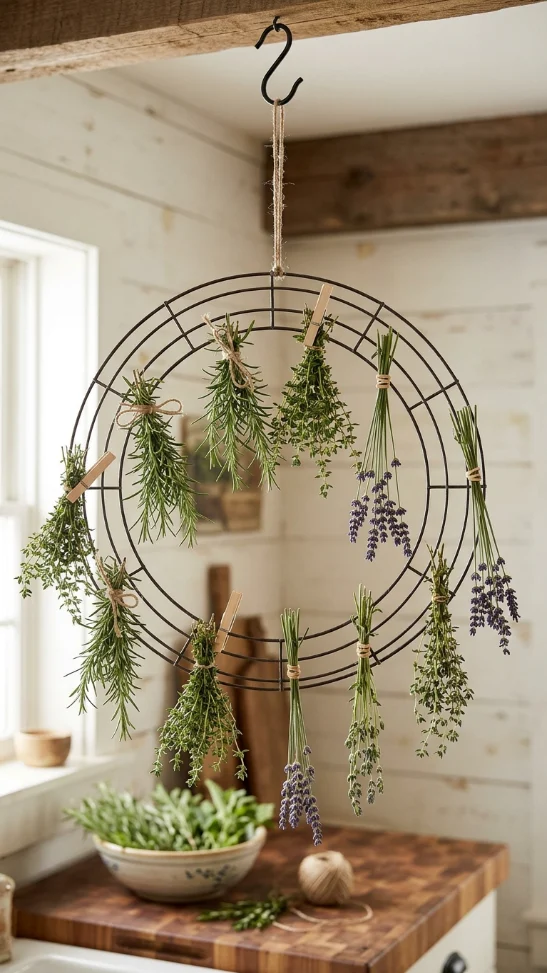
A wire wreath base turns into a light, open drying frame that allows herbs to hang freely with strong airflow from all sides. Bundles of rosemary, thyme, or lavender can be attached using clips, twine, or simple rubber bands.
As the herbs dry, the structure becomes visually interesting, almost like suspended botanical art. It works well in kitchens with a rustic or farmhouse feel and fits small wall areas easily.
Many people use it for diy dry herbs because it costs little and can be adjusted anytime depending on harvest size.
2. Wooden Board with Hooks or Pegs
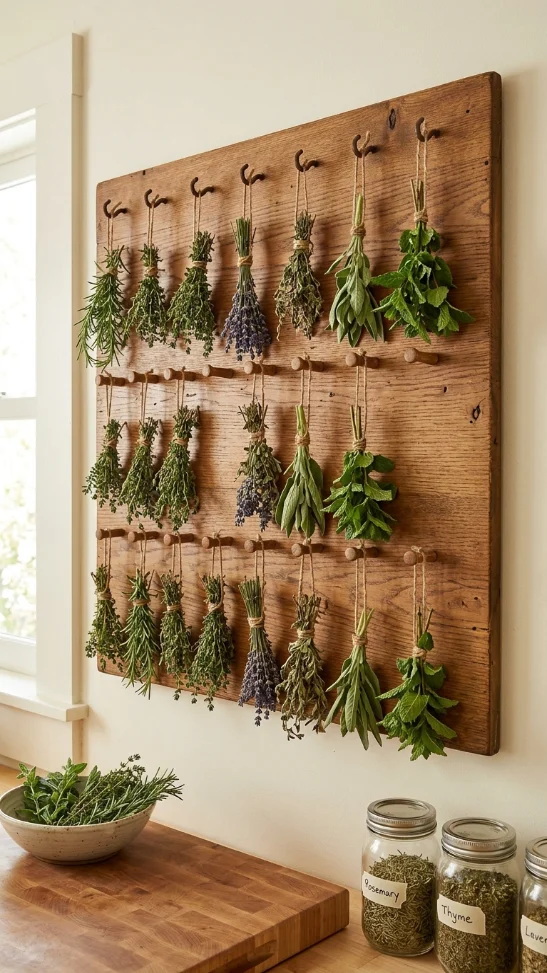
A simple wooden board fitted with hooks or pegs creates a structured drying wall that feels organized yet decorative. Herbs can be tied in small bundles and hung in rows, making it easy to track drying progress.
The wood adds warmth, especially when stained or lightly distressed. This setup fits well in kitchens where people want a clean, intentional look instead of a scattered arrangement.
It also works for rotating seasonal herbs. It’s a strong option for anyone blending herb decor kitchen style with everyday practicality.
3. Macrame Hanging Herb Rack
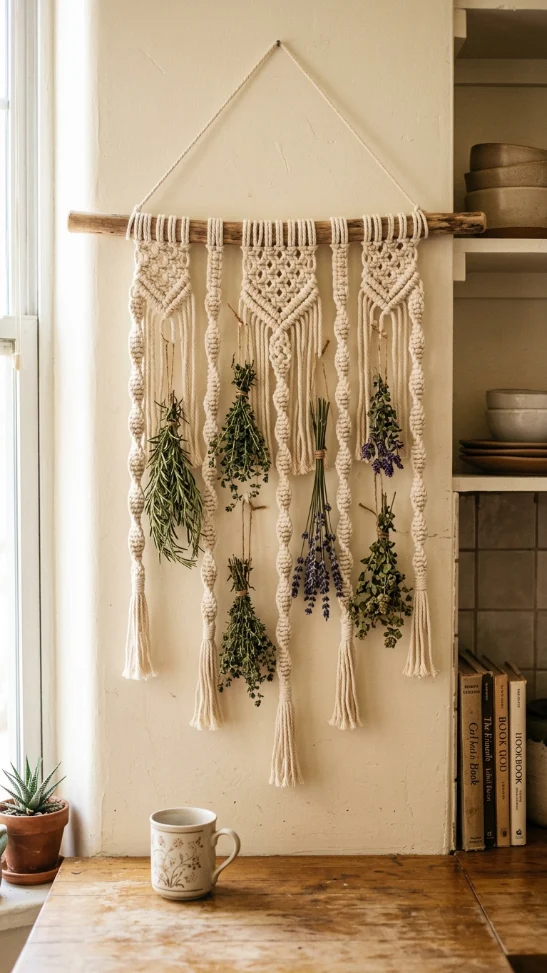
Macrame brings a soft, handmade feel that pairs well with dried herbs. A wooden hoop or bar supports knotted cords where small bundles can hang freely.
The natural fibers allow airflow while adding a decorative touch that feels boho and relaxed. This setup works especially well in apartments or small kitchens where wall space is limited but style still matters.
It’s often chosen for diy herb drying projects because it doesn’t require tools and can be customized in length or design depending on the available space.
4. Bundled Herbs on Wall Hooks or Nails
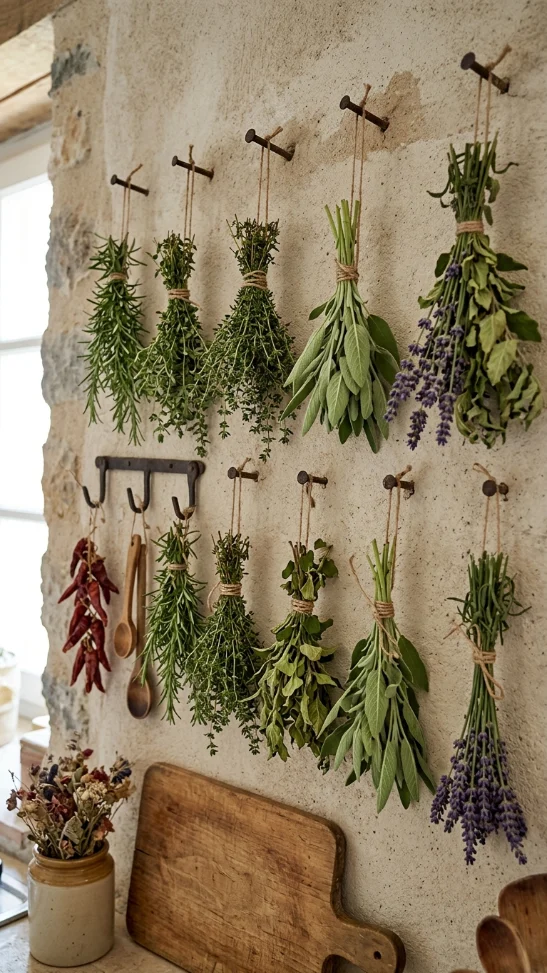
One of the simplest methods involves tying herbs into small bundles and hanging them directly on hooks or nails. The stems dry naturally while the leaves retain their aroma if spaced properly.
This approach works in almost any kitchen and doesn’t require special materials. Over time, the wall develops a layered, lived-in look that feels organic rather than staged.
It’s especially useful after garden harvests when drying needs to happen quickly. This idea fits naturally into herb drying ideas for beginners who want a no-fuss starting point.
5. Herb Wreath Wall Display
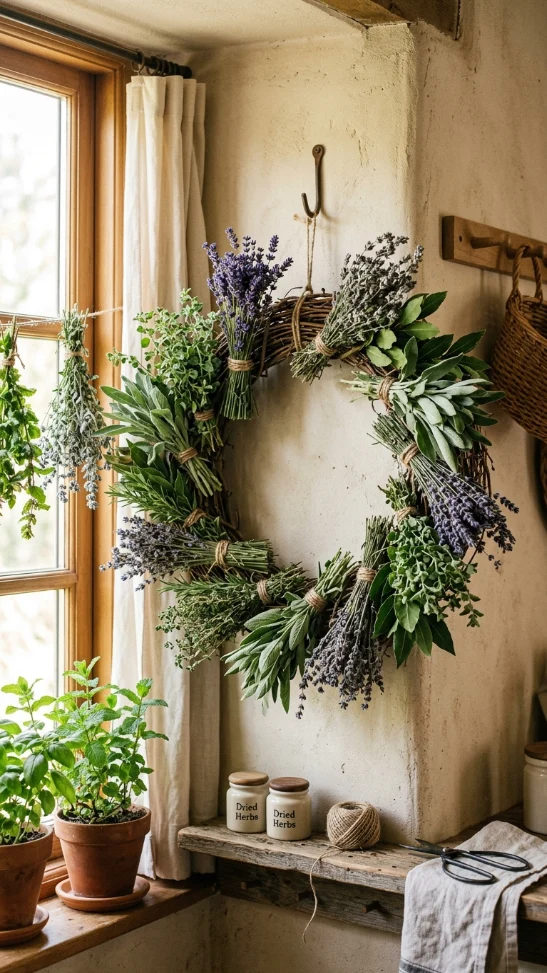
A herb wreath combines drying and decoration in one circular form. Fresh herbs are woven or tied onto a wire or vine base, then left to dry in place.
As the herbs dry, the wreath changes texture and color, becoming a long-lasting wall piece. Lavender, oregano, and sage work particularly well because they hold shape and scent.
It can hang in kitchens, entryways, or near windows with good airflow. This method fits well into herb drying cabinet alternatives when open-air drying is preferred over enclosed storage.
6. Tree Branch or Driftwood Herb Rack
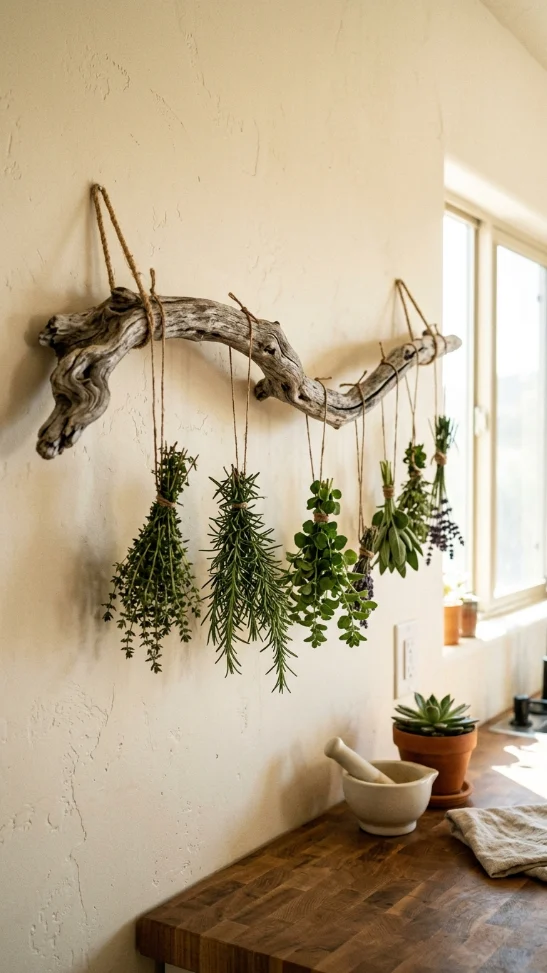
A natural branch or driftwood piece turns herb drying into a raw, earthy wall feature. Small bundles are tied along the branch with twine, allowing uneven spacing that still supports airflow.
The irregular shape makes each setup feel one-of-a-kind, especially when hung against a plain kitchen wall. Herbs like thyme, rosemary, and oregano dry well in this arrangement because they don’t require tight packing.
It blends easily with rustic or boho interiors and works well for people who prefer organic materials in herb decor kitchen setups without buying manufactured racks.
7. Tiered Hanging Mesh Drying Rack
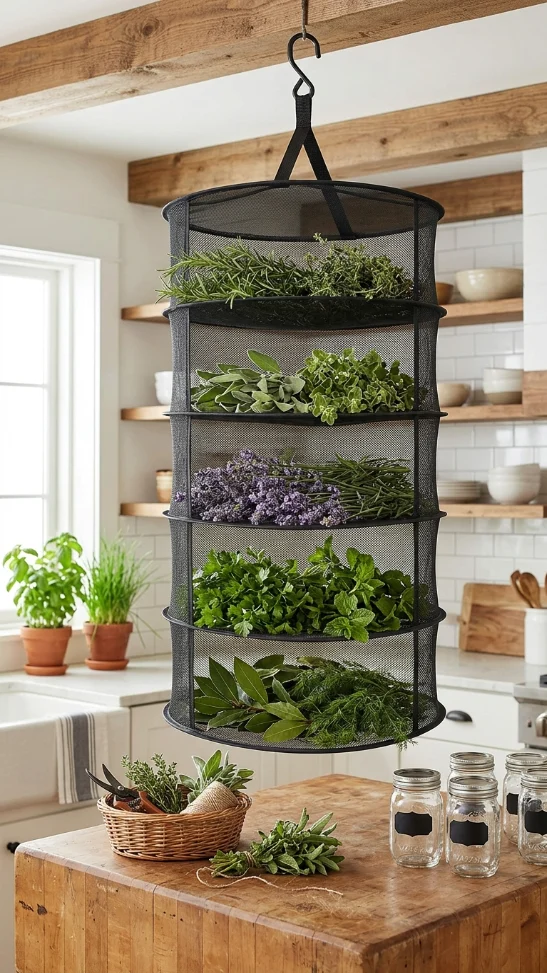
Tiered mesh systems use multiple layers to dry larger herb harvests without taking up floor space. Each level allows airflow while keeping herbs separated, reducing moisture buildup.
This makes it practical for busy gardeners who need to dry different herbs at once. The structure can hang from a hook or ceiling rod and folds away when not in use.
It leans more functional than decorative, but still fits modern kitchen aesthetics. Many use it for diy herb drying when bulk preservation is needed after seasonal harvests or garden cleanouts.
8. Ladder or Pallet Wall Herb Display
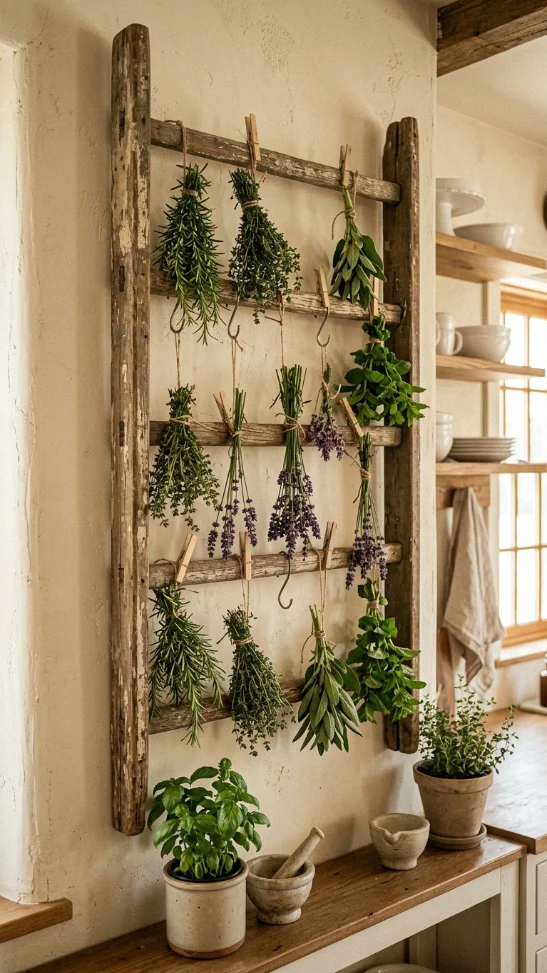
An old wooden ladder or pallet mounted on the wall creates vertical drying space with a strong rustic feel. Herbs can be tied directly to rungs or attached with clips, forming layered rows that are easy to access.
The structure naturally draws the eye upward, making it useful in narrow kitchens or small homes. It also doubles as decor even after herbs are dried, especially in farmhouse-style interiors.
This idea fits well within herb drying ideas for people who want a mix of storage, display, and natural texture in one setup.
9. Rustic Metal Hanging Herb Rack
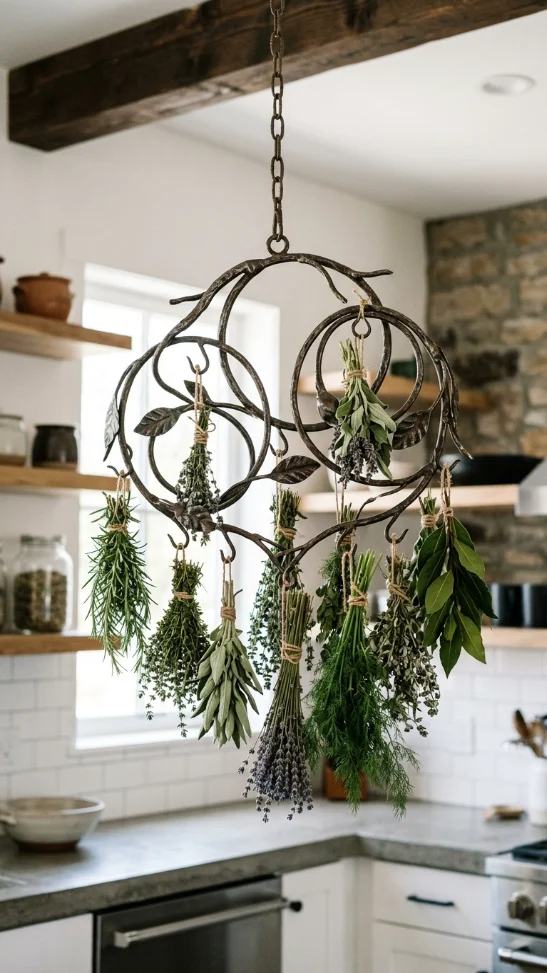
Metal frames shaped like branches, circles, or abstract forms offer a durable way to hang herb bundles while keeping airflow consistent.
The contrast between metal and natural herbs creates a clean, slightly industrial look that still feels warm when paired with dried greens. It works well in modern kitchens where wood-heavy designs may not fit.
Bundles can be rearranged easily as herbs dry at different speeds. This option is often used by people combining style with function in herb decor kitchen layouts that lean toward minimal but intentional design.
10. Pegboard Herb Drying Wall
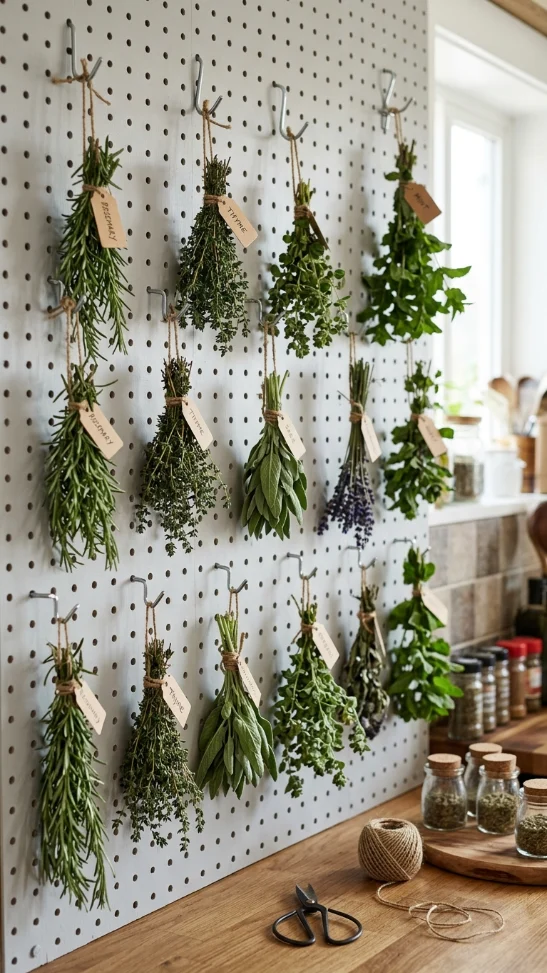
A pegboard system turns a blank wall into a flexible drying station. Hooks can be moved around depending on bundle size, making it easy to adjust as herbs are added or removed.
This setup keeps everything visible and organized, which helps prevent overcrowding during drying. It works especially well in compact kitchens where space needs to stay adaptable.
The grid pattern also adds a subtle design element when painted in neutral tones. It’s a practical choice for diy dry herbs setups where control and customization matter more than decorative complexity.
11. Tension Rod Herb Drying Setup
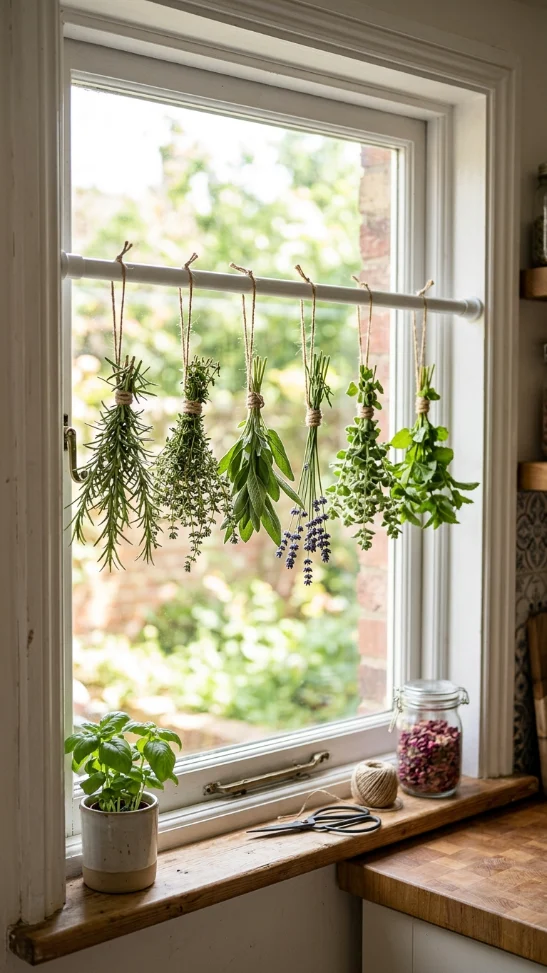
A tension rod placed between walls or inside a window frame creates an instant drying line without drilling or permanent changes.
Herbs are tied in small bundles and hung along the rod, where natural light and airflow help them dry evenly. This setup is especially useful in rented spaces or compact kitchens where flexibility matters.
It can be adjusted higher or lower depending on harvest size. Many use it as part of diy herb drying because it’s quick to set up and remove, making it practical for seasonal use without cluttering the kitchen permanently.
12. Wall Shelf Herb Bouquet Display
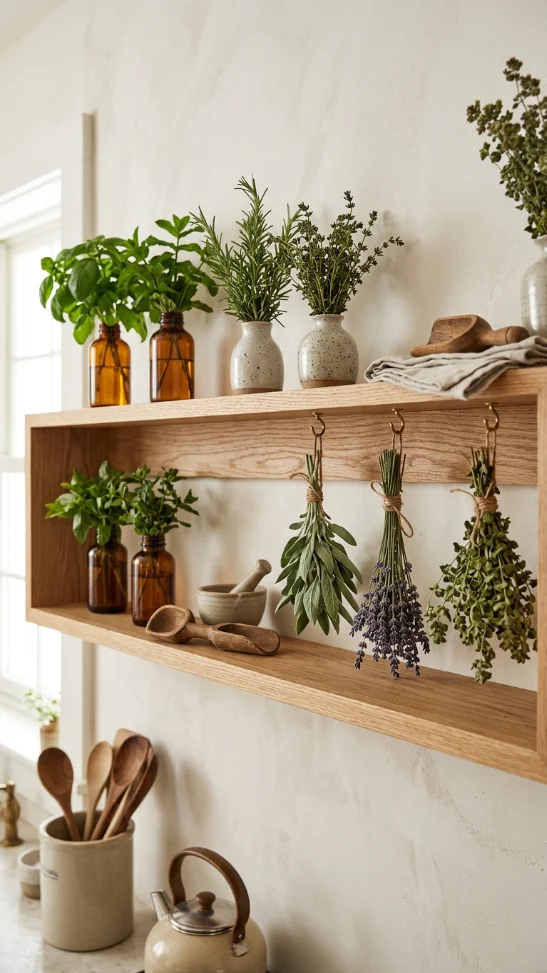
Wall shelves can double as a drying and display space when herbs are arranged in loose bouquets or small bunches. As they dry, they slowly transition from fresh greens to muted tones, adding warmth to the room.
Glass jars, ceramic vases, or simple twine bundles can all be used depending on the style of the kitchen. This method blends storage with decor, making it ideal for people who enjoy functional styling.
It fits naturally into herb decor kitchen designs where herbs stay visible instead of being hidden away in containers or cabinets.
13. Old Window Frame Herb Drying Rack
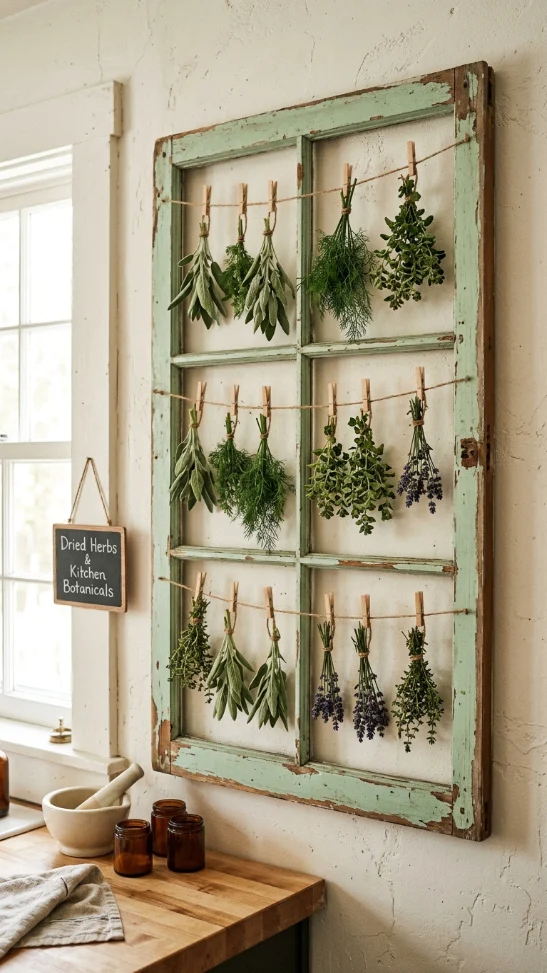
An old window frame repurposed as a drying rack creates a vintage-style focal point. Thin strings or wires can be stretched across the frame to hang herb bundles in neat rows.
The open structure allows airflow while giving the wall a nostalgic, farmhouse feel. It works well with herbs like sage, dill, and oregano that dry well in airy conditions.
This idea is often chosen by people looking for creative herb drying ideas that combine reuse and design, turning forgotten materials into something functional and visually interesting in the kitchen.
14. Ceiling-Suspended Herb Drying System
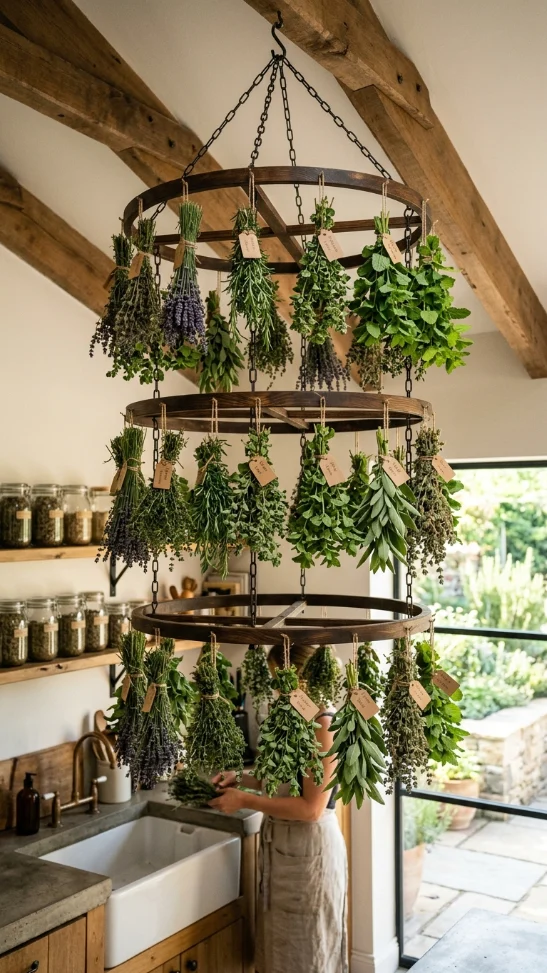
A ceiling-suspended rack uses vertical space efficiently, making it ideal for kitchens with limited wall area. Herbs are hung from a multi-tier structure that allows air to circulate from all directions.
It’s especially useful during peak harvest seasons when many bundles need drying at once. The hanging layers create a visually striking display, almost like floating greenery that slowly transforms as it dries.
This setup is commonly used in larger kitchens or garden homes and fits well into broader diy dry herbs strategies where capacity matters as much as appearance.
15. Herb Garland Wall Swag Display
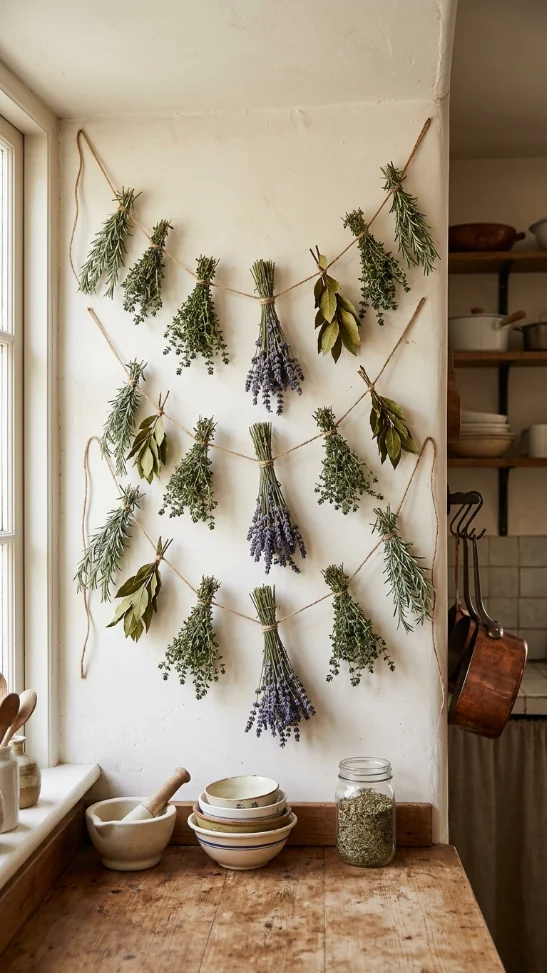
Herb garlands or swags are made by tying small bundles along a string or vine and hanging them in flowing lines across a wall. As they dry, they form soft, textured curves that feel both decorative and natural.
Lavender, rosemary, and thyme work especially well because they hold their shape. This method brings movement into the kitchen space and works well above counters or along open wall sections.
It’s a simple approach that fits beautifully into herb drying cabinet alternatives when open-air drying is preferred and herbs are meant to stay visible as part of daily decor.
16. Mini Clip String Herb Hanging System
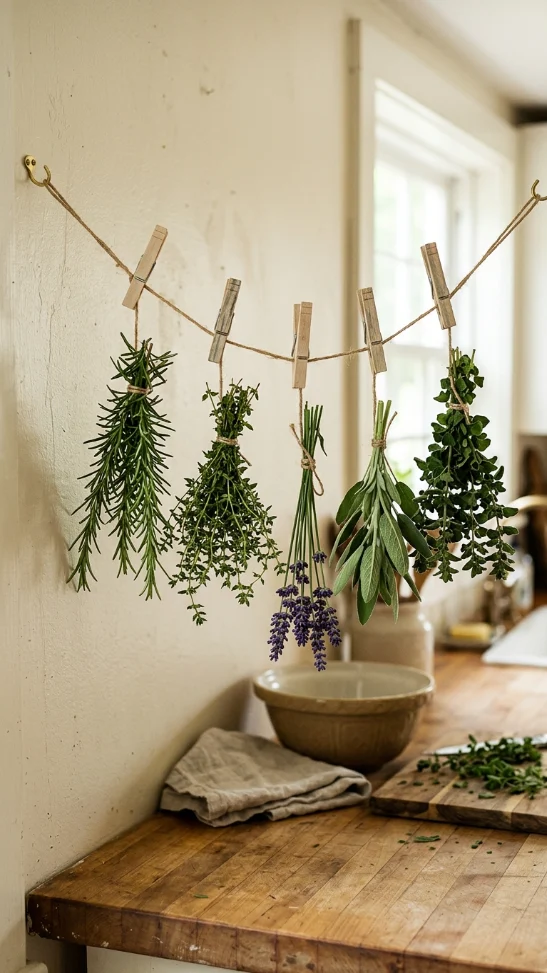
A simple string stretched across a wall with small wooden clips creates an easy, flexible drying setup. Each herb bundle can be clipped individually, making it simple to adjust spacing as airflow needs change.
This works well for small harvests or mixed herbs that dry at different speeds. The setup feels light and casual, adding a handmade touch to kitchen walls without looking cluttered.
It’s especially useful for renters or small-space living where tools and drilling are limited. This approach fits naturally into diy herb drying routines focused on convenience and quick seasonal use.
17. Bakery-Style Screen Herb Drying Rack
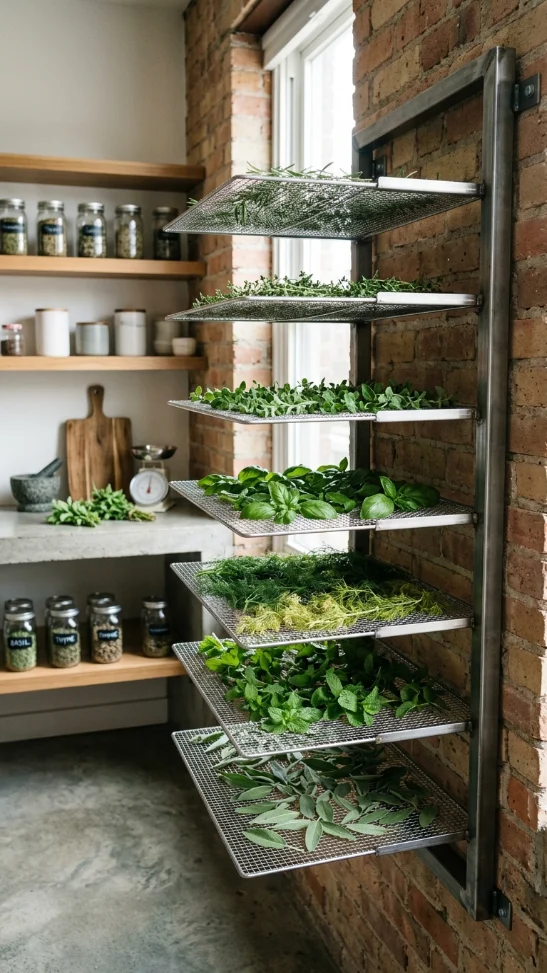
Inspired by bakery cooling racks, metal mesh screens can be mounted or stacked vertically on a wall to dry herbs in large batches. The flat surface allows even airflow, reducing moisture buildup and speeding up drying time.
Herbs can be spread out loosely rather than tied, which works well for delicate leaves like basil or dill. This setup leans more functional than decorative, but it still fits modern kitchens with an industrial edge.
It’s often chosen for diy dry herbs when efficiency and high-volume drying matter more than visual styling.
18. Herb Jars on Wall Shelf Display
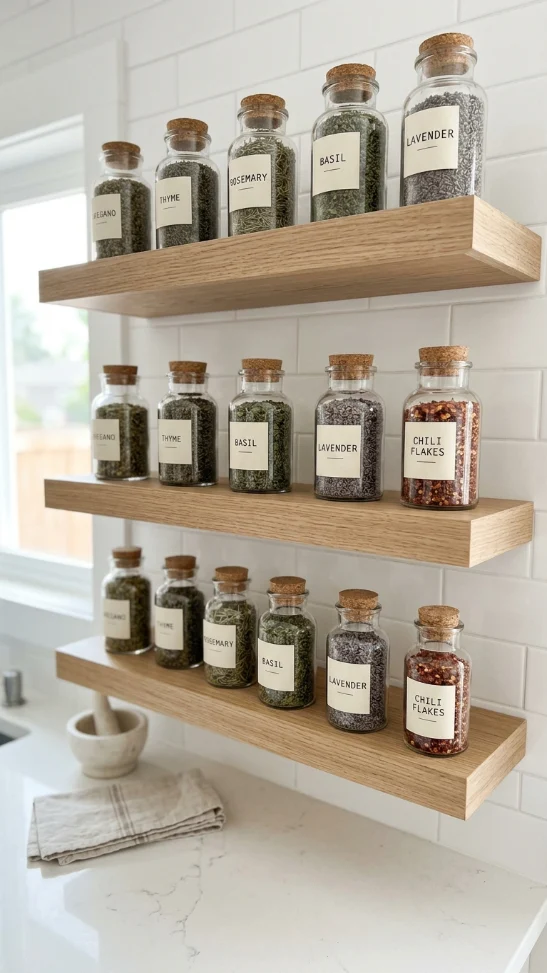
Glass jars mounted on floating shelves turn dried herbs into long-term kitchen decor. Once herbs are fully dried, they can be transferred into jars, preserving color and aroma while keeping them visible.
Labeling adds a clean, organized look, especially when different herbs are stored side by side. This method works well in minimalist kitchens where structure and order are important.
It also reduces mess compared to hanging systems. It fits naturally into herb decor kitchen styles where dried herbs become part of the visual identity rather than just stored ingredients.
19. Vintage Herb Drying Wall Rack
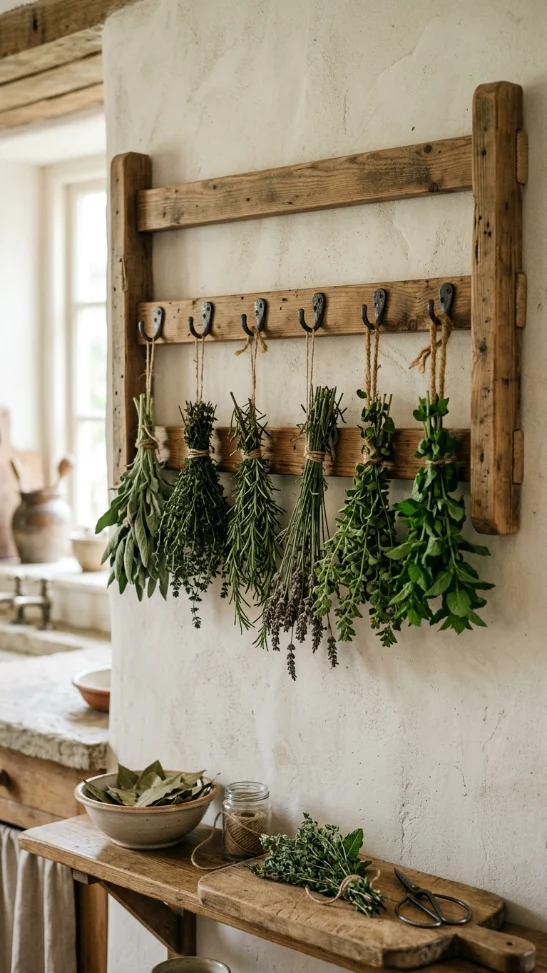
A vintage-style rack, whether thrifted or newly made, brings character to herb drying spaces. Often made of aged wood or distressed metal, it holds bundles in a way that feels both functional and decorative.
The worn textures contrast nicely with fresh green herbs as they dry and shift in color over time. It works well in farmhouse or cottage-inspired kitchens where older materials add warmth.
This setup appeals to people who enjoy timeless herb drying ideas that feel collected over time rather than newly purchased or overly polished.