
Hillside Gardening: How to Garden on Slopes Step by Step
Gardening on a hillside is different from planting on flat ground. Slopes bring challenges, but they also bring chances to grow in new ways.
A hillside can look wild and messy if left alone, but with a little care, it can turn into a beautiful garden full of life. The slope changes how water runs, how soil holds, and even how you plant. Instead of fighting the hill, you can work with it.
Hillside gardens can stop erosion, make good use of space, and give a garden a layered, natural look. Below are 12 simple ideas to help you create a garden on a slope that lasts and looks great.
1. Work With the Slope, Not Against It
When planting on a hillside, it helps to follow the land’s natural shape. Trying to force it flat often causes more problems.

Planting across the slope, instead of up and down, slows water and keeps soil from washing away. This also gives plants a better chance to take root and grow.
Think of the slope as a partner, not an enemy. By working with it, you can guide the flow of water, soil, and plants in ways that keep the hillside healthy and green.
2. Build Terraces for Support
Terraces are flat steps built into the hill. They give you level spots where plants can grow safely. A terrace holds soil in place and makes it easier to walk and work.
You can build them with stone, wood, or garden blocks. Even small terraces can make a big difference on a slope. They reduce erosion, give space for planting, and create order in the garden.
Start with one or two terraces and add more later. Over time, your hillside will look like a layered garden full of life.
3. Choose Strong, Deep-Rooted Plants
On a hillside, roots do more than feed plants. They help hold the soil together. Deep-rooted plants are perfect for slopes because they reach down and lock the soil in place.
Shrubs, groundcovers, and native plants often work best because they spread wide and need less care once established.
A mix of tall and short plants can cover the hillside and keep it stable. By choosing strong plants, you create a living net that protects the hill while adding beauty and color throughout the year.
4. Control Water Flow
Water can be a challenge on hillsides. Rain runs quickly down a slope and may carry soil away with it. To stop this, plant across the hill and use mulch, rocks, or logs to slow the water.
This helps the ground soak up more moisture, which is good for your plants. You can also guide water into small channels that move it safely.
Controlling water keeps your soil healthy and your plants safe. With a little planning, the rain will feed your garden instead of washing it away.
5. Add Paths for Easy Access
Slopes can be hard to climb, especially when carrying tools or water. Adding a path makes it safer and easier to care for your garden.
Paths can be made with gravel, wood chips, or stepping stones. They keep your feet steady and protect plants from being stepped on.
A winding path is often better than a straight one because it feels natural and reduces steep climbs. With good paths, you will enjoy walking in your garden, and it will be easier to keep the hillside tidy.
6. Use Retaining Walls Where Needed
If your slope is very steep, a retaining wall may be needed. Retaining walls hold back soil and give you flat areas for planting. They can be built with stone, brick, or timber.
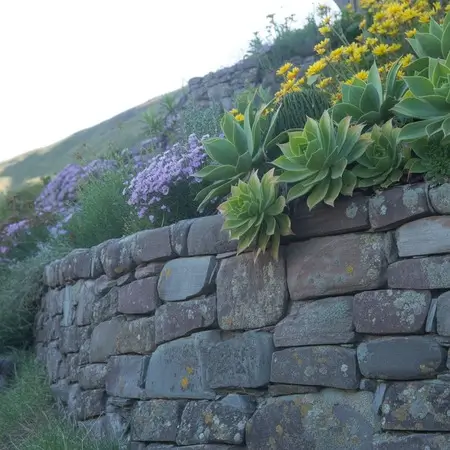
Besides being strong, they can look beautiful too. Plants spilling over the wall add charm and softness. Small walls can be built as a do-it-yourself project, but for very tall ones it is better to get help.
With a solid wall in place, your hillside garden will be safer, stronger, and more useful.
7. Plant in Layers for Beauty and Balance
Hillsides naturally lend themselves to layered planting. Place taller plants higher up, medium-sized ones in the middle, and groundcovers or flowers closer to the bottom.
This makes the hillside look full, balanced, and colorful. Layers also help hold the soil in place by covering every level of the slope.
Think of it like painting a picture, with plants as your colors. By mixing sizes and textures, you create a hillside that looks lively from top to bottom and feels like part of the natural landscape.
8. Cover Bare Soil Quickly
Bare soil on a slope is risky because it can wash away with just one heavy rain. That is why it is important to cover it as soon as possible.
Groundcovers, mulch, or temporary mats can protect the soil until bigger plants grow in. Fast-growing plants like creeping thyme or clover are excellent for filling spaces.
Mulch also works well, keeping moisture in and soil steady. Covering bare soil quickly not only protects the hillside but also helps your garden look neat and well cared for.
9. Add Steps or Stairs for Comfort
On a steep slope, steps or stairs make it easier to move around. They give you a safe way to climb and also make carrying tools or baskets simpler.
Steps can be built from stone, wood, or logs that fit into the hillside. A wide, steady step is safer than one that is too narrow or tall.
Curved or gentle stairs blend into the garden and add charm. By adding steps, you make your hillside garden more welcoming and easy to use every day.
10. Mix Function and Beauty
A hillside does not have to be only for looks. It can be useful too. You can mix flowers with herbs, shrubs with fruit, or groundcovers with vegetables.
For example, rosemary and lavender love sunny slopes and also help hold soil. Strawberries can spread across the ground, giving both beauty and food.
Mixing function and beauty makes your garden more rewarding. Every space can have a purpose. A hillside that gives you both food and flowers will feel alive, practical, and full of charm.
11. Think About Sun and Shade
Not every part of a hillside gets the same amount of light. The top may be hot and dry, while the bottom stays cooler and wetter.
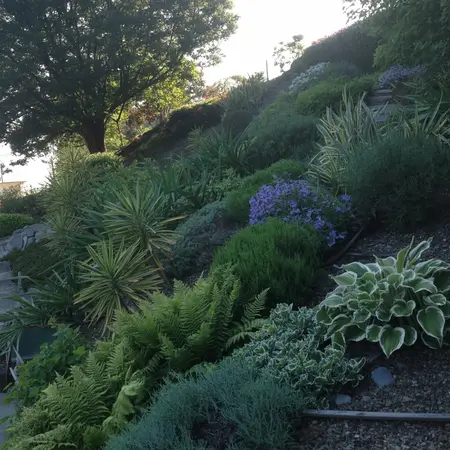
Matching plants to these spots helps them grow better. Sun-loving plants do well higher up, while shade-loving ones fit at the bottom. Some plants enjoy part sun and can go in the middle.
Watching how the sun moves across your hill is a smart first step. When plants are placed in the right spot, they will thrive with less effort.
12. Keep Up With Care
A hillside garden needs a little more attention than a flat one. Rain, weeds, and loose soil can cause trouble if left alone.
The best way to care for it is to check often and fix small problems before they grow big. After a heavy rain, walk your garden and see where the water went.
Add rocks, mulch, or plants where needed. Pull weeds early so they don’t spread. With small steps of care, your hillside will stay strong, safe, and green for years to come.
Final Thoughts
Hillside gardening is not always easy, but it is worth the work. By using terraces, paths, plants, and good planning, you can turn a slope into a garden full of strength and beauty.
Each idea helps the hillside hold together while giving space for plants to thrive. Start small, watch the land, and grow step by step.
Over time, your hillside will change from a challenge into one of the best parts of your garden. With patience and care, the slope becomes a place full of life.