
Garden Fence Ideas That Actually Transform Your Outdoor Space
A garden fence does more than mark a boundary. It shapes how your entire space feels and functions.
Whether you’re trying to keep animals out, add privacy, or simply make your yard look more intentional, the right fence can do all three at once.
These ideas are chosen to balance beauty with purpose, so you’re not just pinning inspiration. You’re planning something you can actually build and enjoy.
1. Classic White Picket Fence
There’s a reason this style never fades. A white picket fence instantly softens any garden and gives structure without feeling heavy or closed off.
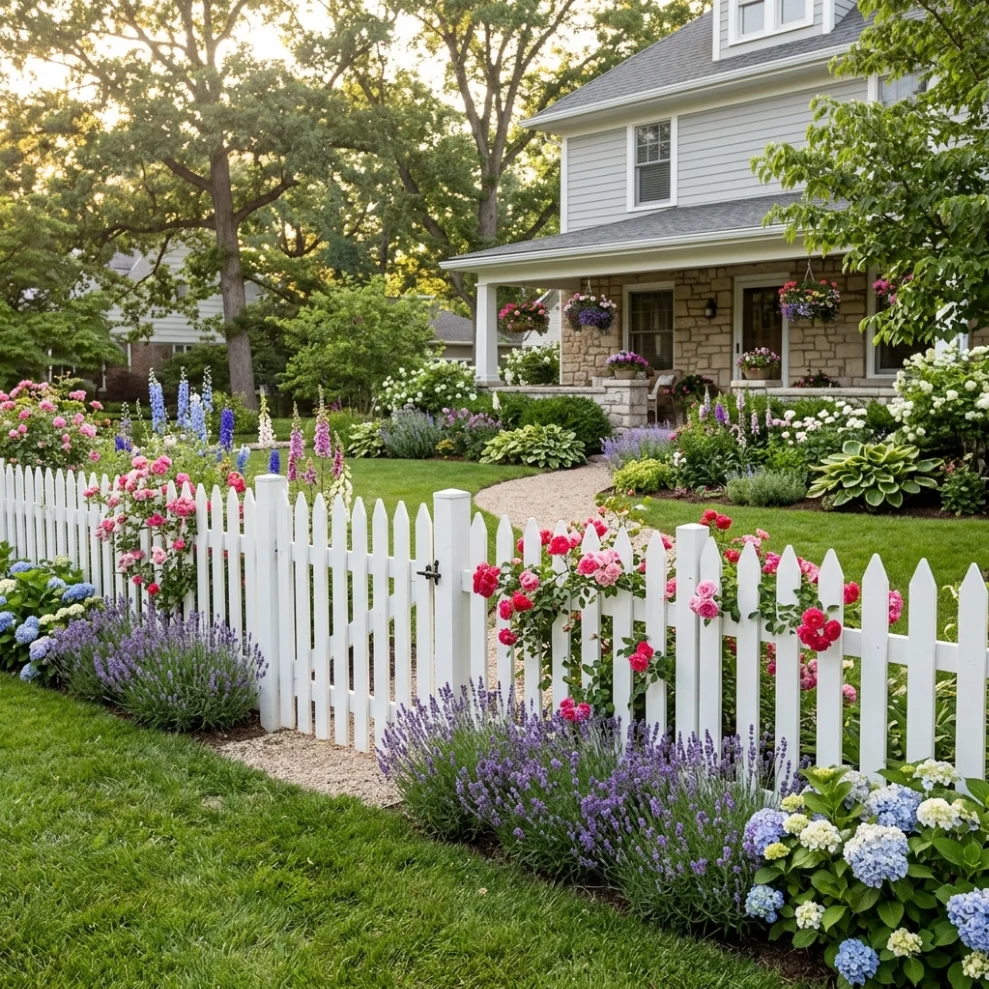
It works beautifully around flower beds, front yards, or even small vegetable patches where you want charm without sacrificing visibility. You can keep it traditional or tweak the spacing and height depending on your needs.
Many homeowners love it for simple Garden Fence Plans because it’s beginner-friendly and widely available. Pair it with climbing roses or lavender along the base for that lived-in feel that makes landscaping a fence line look effortless.
2. Modern Horizontal Slat Fence
If your taste leans clean and contemporary, horizontal slats shift the entire mood of a garden. The lines draw your eye across the space, making even smaller yards feel wider and more intentional.
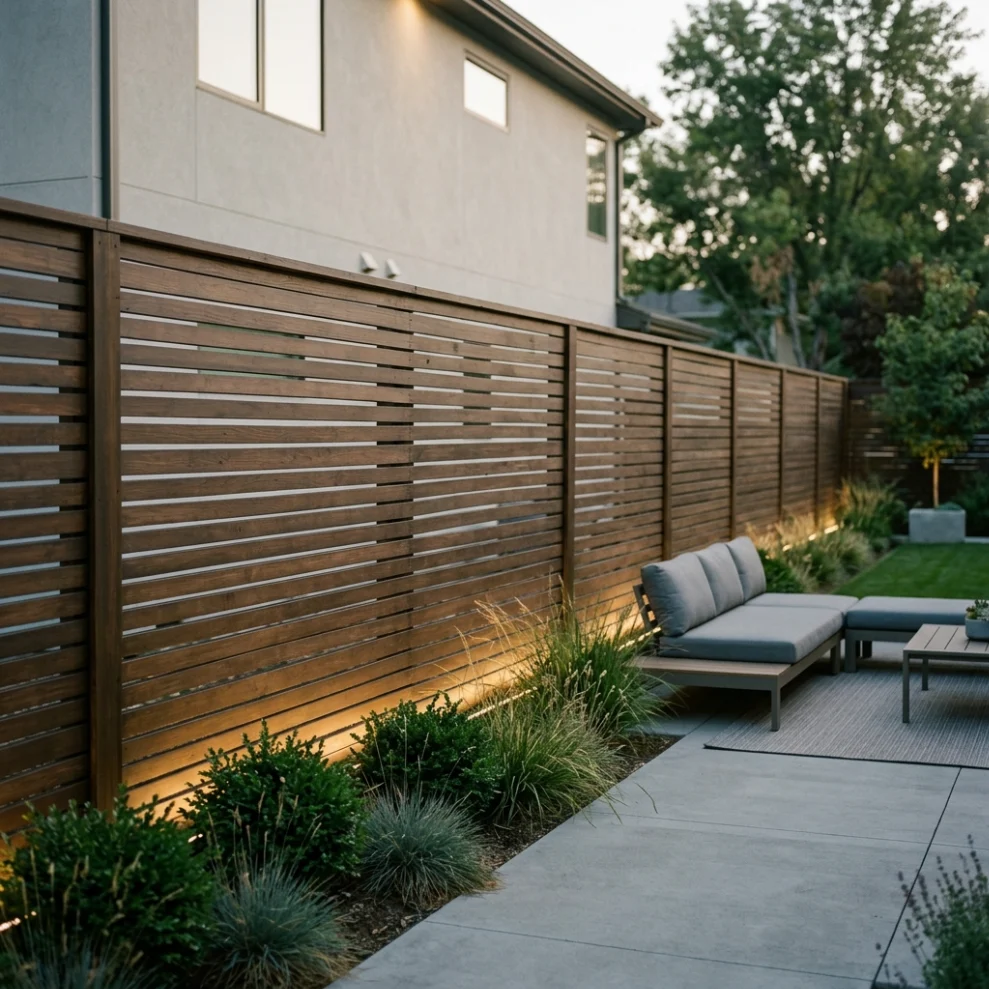
Narrow gaps between boards allow airflow while still giving a sense of privacy, which is ideal for backyard seating areas. This style works well with dark stains or natural wood tones, depending on your home’s exterior.
It’s a popular choice for building a garden fence that feels current without being trendy in a dated way. Add subtle lighting along the base for a polished finish.
3. Rustic Split-Rail Fence
A split-rail fence feels relaxed and open, perfect if you don’t want to block your view or make your yard feel boxed in.
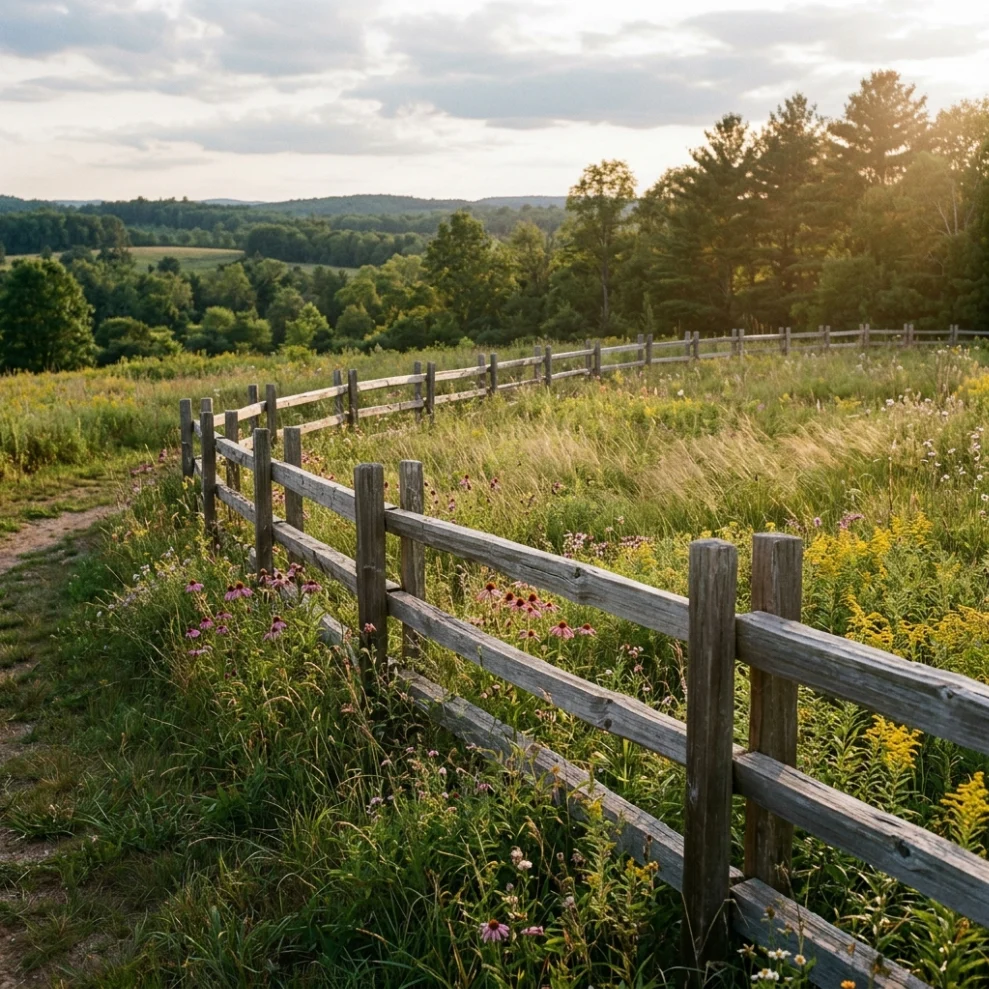
It’s especially useful for defining larger spaces like cottage gardens or wildflower areas while still letting everything breathe.
The natural wood tones blend into the landscape, making it ideal for landscaping a fence line with grasses or native plants.
While it won’t keep out smaller animals, it does create a clear boundary and adds that countryside character many people try to replicate. It’s also one of those quick fence ideas that can be installed without complicated tools.
4. Woven Wattle Fence
This is one of those fences that feels like it belongs in a storybook garden. Made by weaving flexible branches like willow or hazel between upright stakes, it creates a textured, organic barrier that looks handmade in the best way.
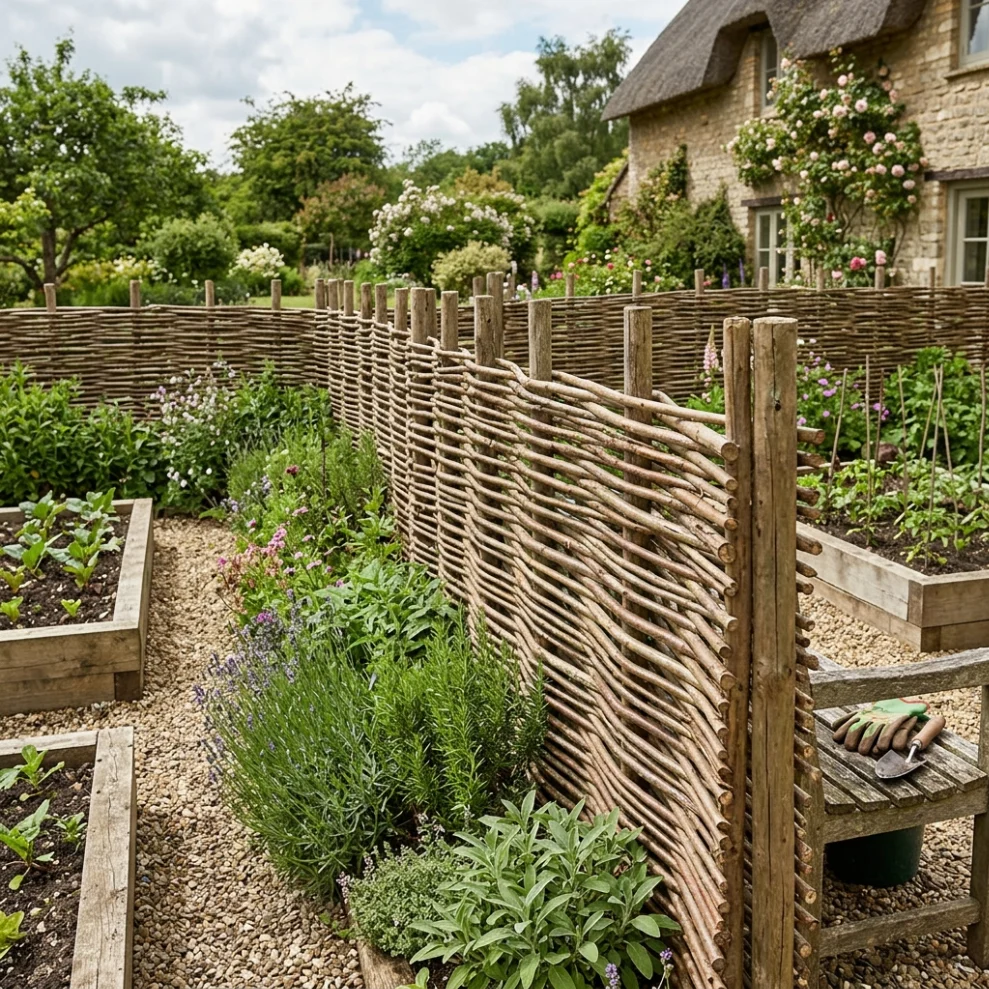
It’s surprisingly sturdy for low borders and works well around raised beds or herb gardens. If you’re interested in garden fencing diy, this is one of the most satisfying projects you can try using natural materials.
Over time, it weathers into a soft, earthy tone that blends seamlessly into the garden, making everything feel grounded and intentional.
5. Wood-and-Wire Garden Fence
For anyone growing vegetables, this is one of the most practical choices you can make. A simple wooden frame paired with wire mesh keeps rabbits and other small animals out without blocking sunlight or airflow.
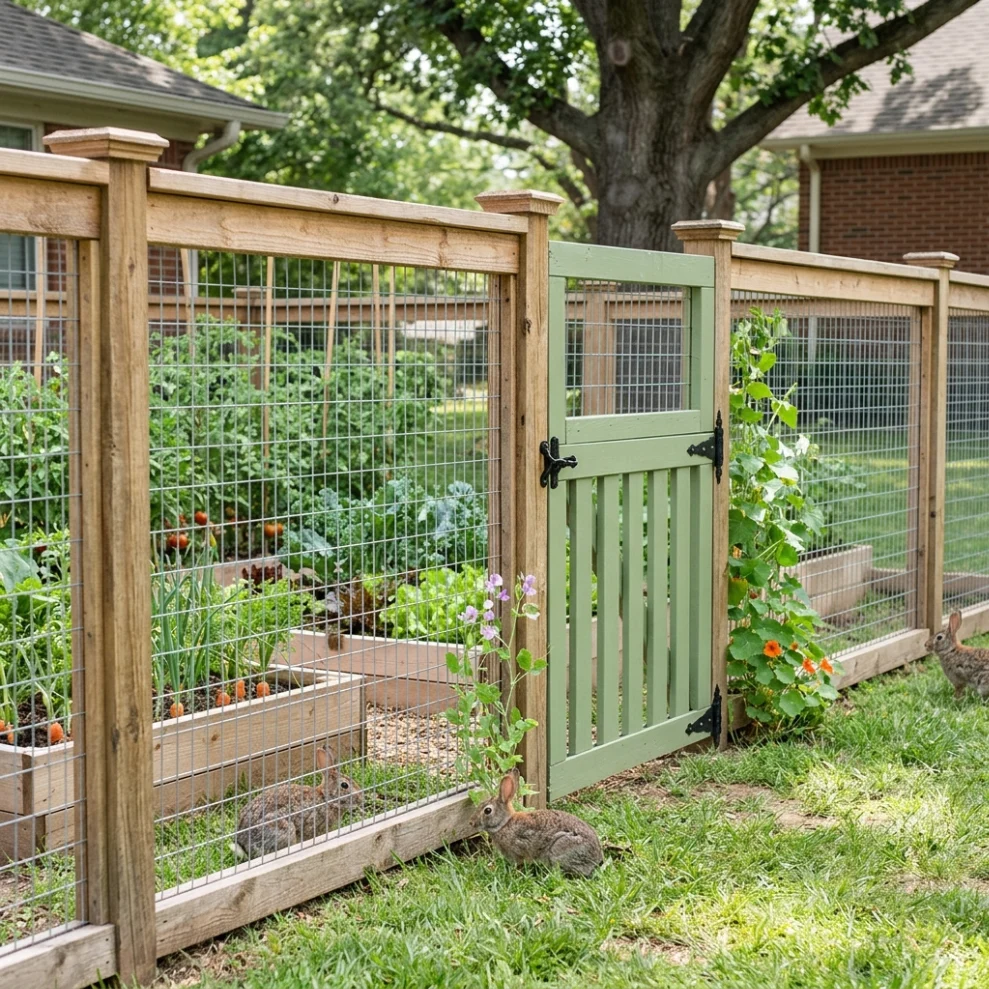
It’s functional, but it doesn’t have to look plain. You can paint the wood, add a small gate, or even train climbing plants along it. This style is often included in garden fence plans because it balances cost and effectiveness so well.
If you’re serious about protecting your crops while still keeping things visually clean, this is one of the smartest building a garden fence options to start with.
6. Trellis or Lattice Fence
A trellis or lattice fence gives you structure without heaviness, which makes it perfect for smaller gardens that need both privacy and light.
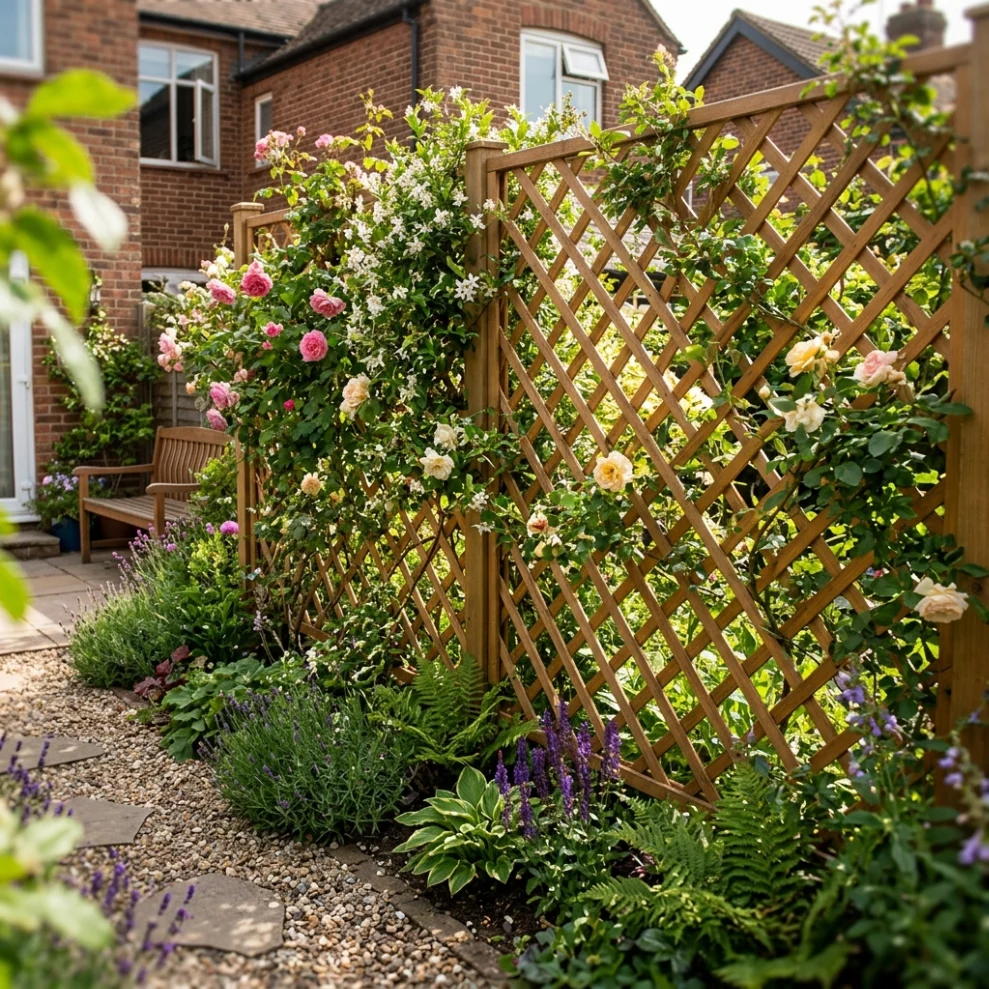
The open grid design allows climbing plants like jasmine, beans, or roses to weave through and slowly turn the fence into a living wall. It’s one of those ideas that evolves over time, getting better each season.
If you’re planning garden fencing diy, this is a great balance between decorative and functional. It also works beautifully when landscaping a fence line with layered greenery, creating depth without crowding your space.
7. Wrought-Iron or Aluminum Fence
For a more refined look, metal fencing brings in elegance without overwhelming the garden. Wrought iron has that classic, slightly ornate feel, while aluminum offers a similar look with less maintenance.
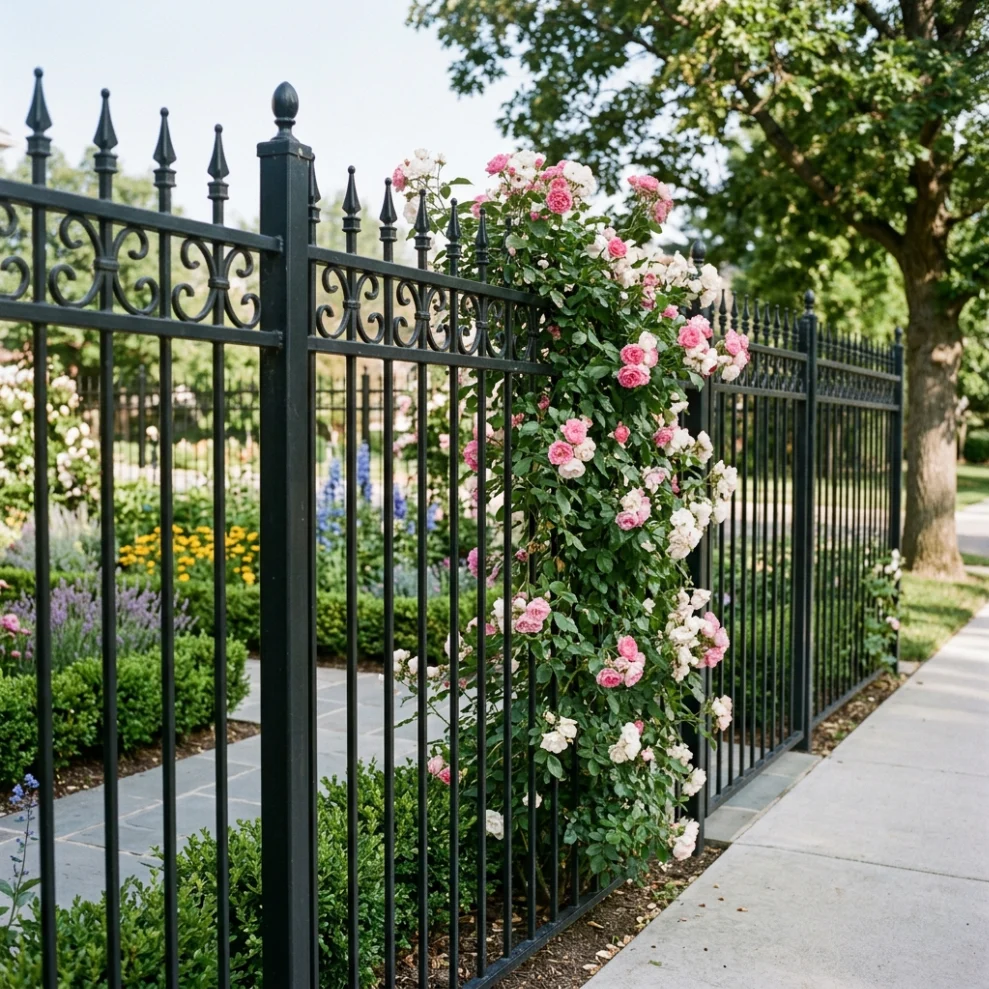
The open design keeps sightlines clear, which is ideal if you want to highlight flowers or landscaping inside the boundary. This style pairs especially well with climbing roses or structured garden layouts.
While it’s not the cheapest option, it’s a long-term choice for building a garden fence that holds up beautifully over time and doesn’t require constant upkeep like wood.
8. Upcycled Pallet Fence
If you like projects with character, a pallet fence gives you flexibility to create something truly your own. Reclaimed wood adds texture and a slightly imperfect charm that feels warm and lived-in.
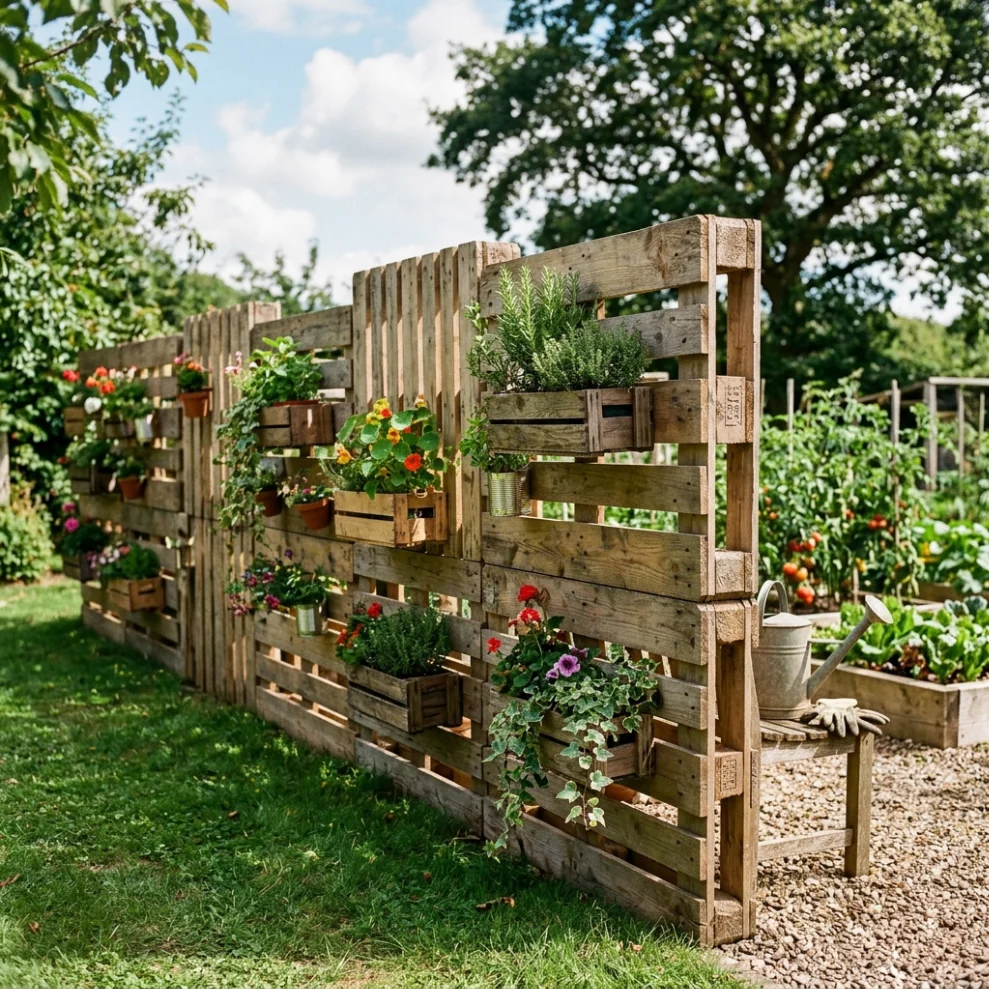
You can keep it raw for a rustic look or sand and paint it to match your space. It’s one of the most approachable garden fencing diy options, especially if you’re working with a tight budget.
Many people also turn pallets into vertical planters, making this one of those quick fence Ideas that doubles as a feature wall for herbs, flowers, or trailing plants.
9. Rolled Bamboo or Reed Fence
Bamboo fencing brings a calm, natural feel that works beautifully in both modern and relaxed garden settings. It’s lightweight, easy to install, and instantly adds texture without needing a full construction project.
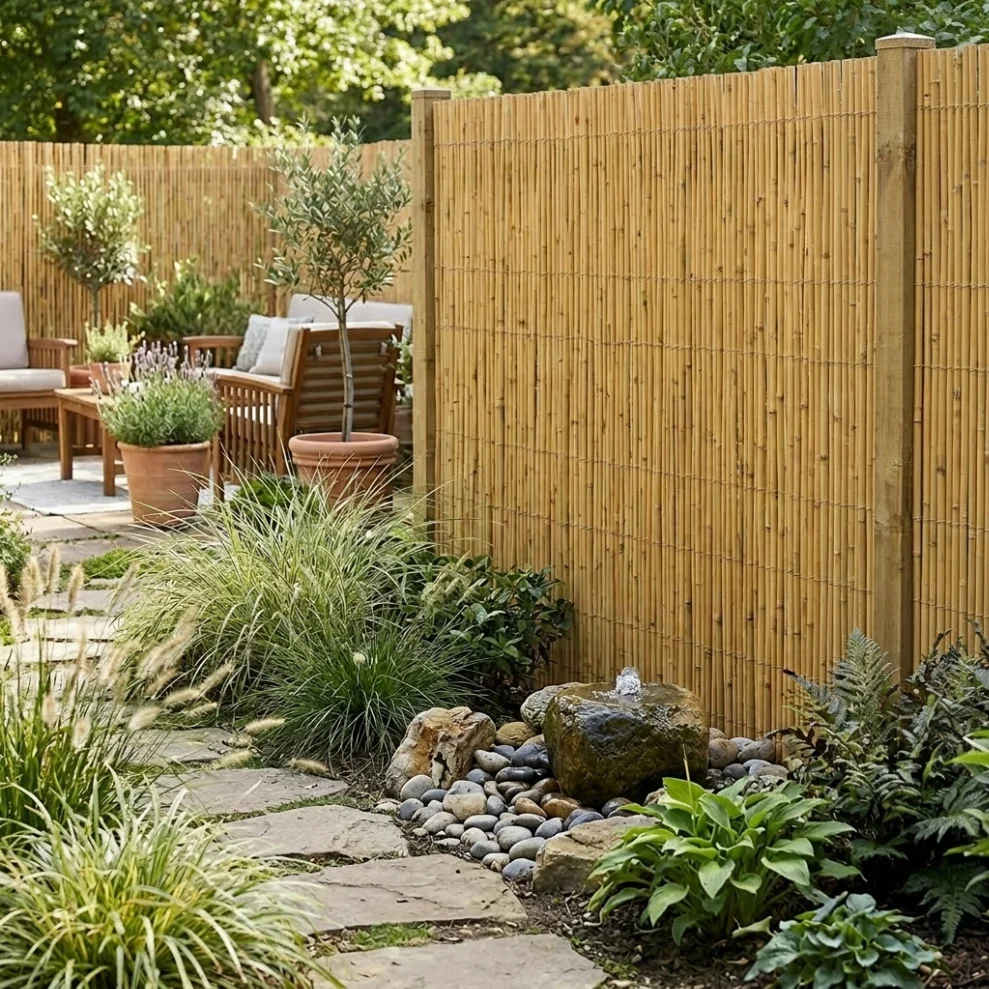
This makes it one of the most practical quick fence ideas if you want a fast transformation. It works well as a screen along existing fences or as a standalone divider for patios and garden zones.
When paired with stones, grasses, or water features, it creates a peaceful atmosphere that feels intentional without trying too hard, perfect for simple garden fence plans.
10. Stained Wood Privacy Fence
A stained wood fence adds warmth while giving you the privacy many gardens need, especially in busy neighborhoods. Rich tones like cedar or walnut help the fence blend into the landscape rather than stand out harshly.
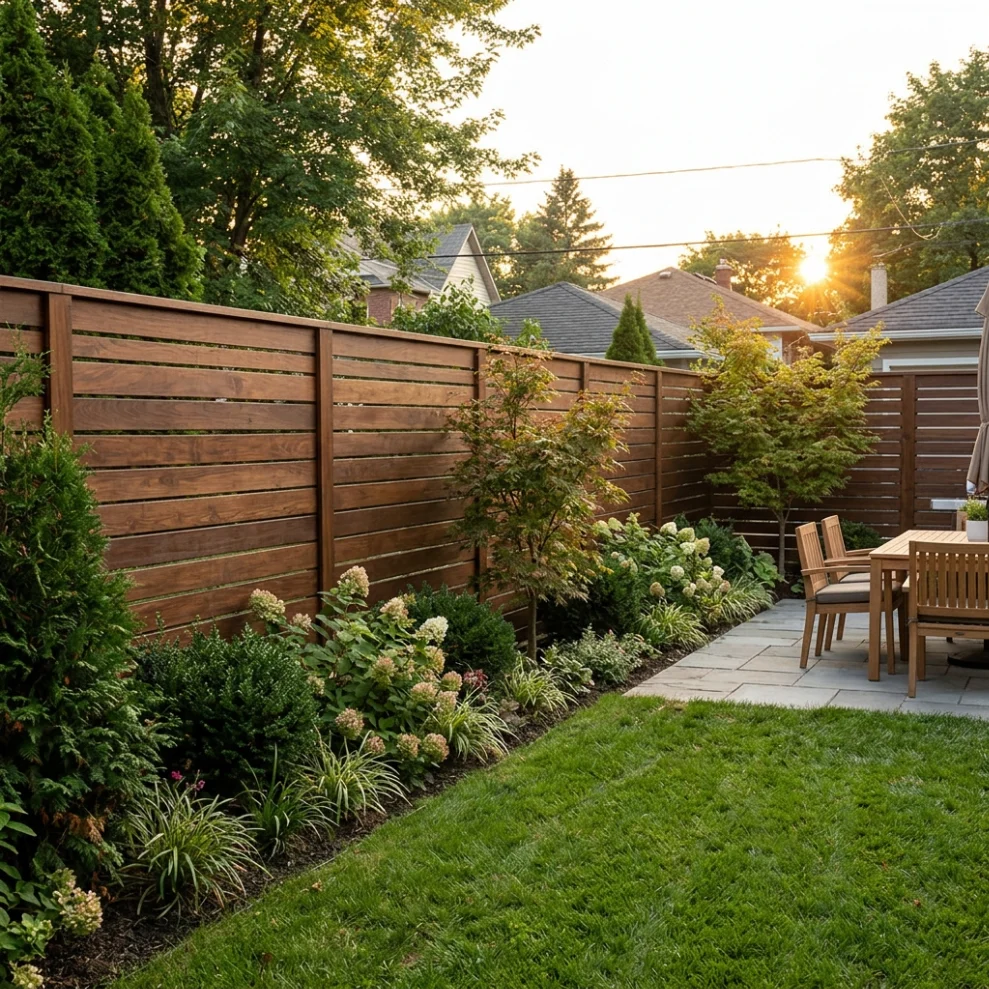
You can go vertical for a traditional look or horizontal for something more modern. It’s a strong choice for building a garden fence that needs to block wind, noise, or visibility without feeling cold.
To soften the structure, try landscaping a fence line with shrubs, layered plants, or even small trees to create a more natural transition.
11. Espalier or Vine-Covered Living Fence
A living fence feels less like a barrier and more like part of the garden itself. By training fruit trees or vines along wires or a simple frame, you create a green wall that produces flowers, shade, and even food.
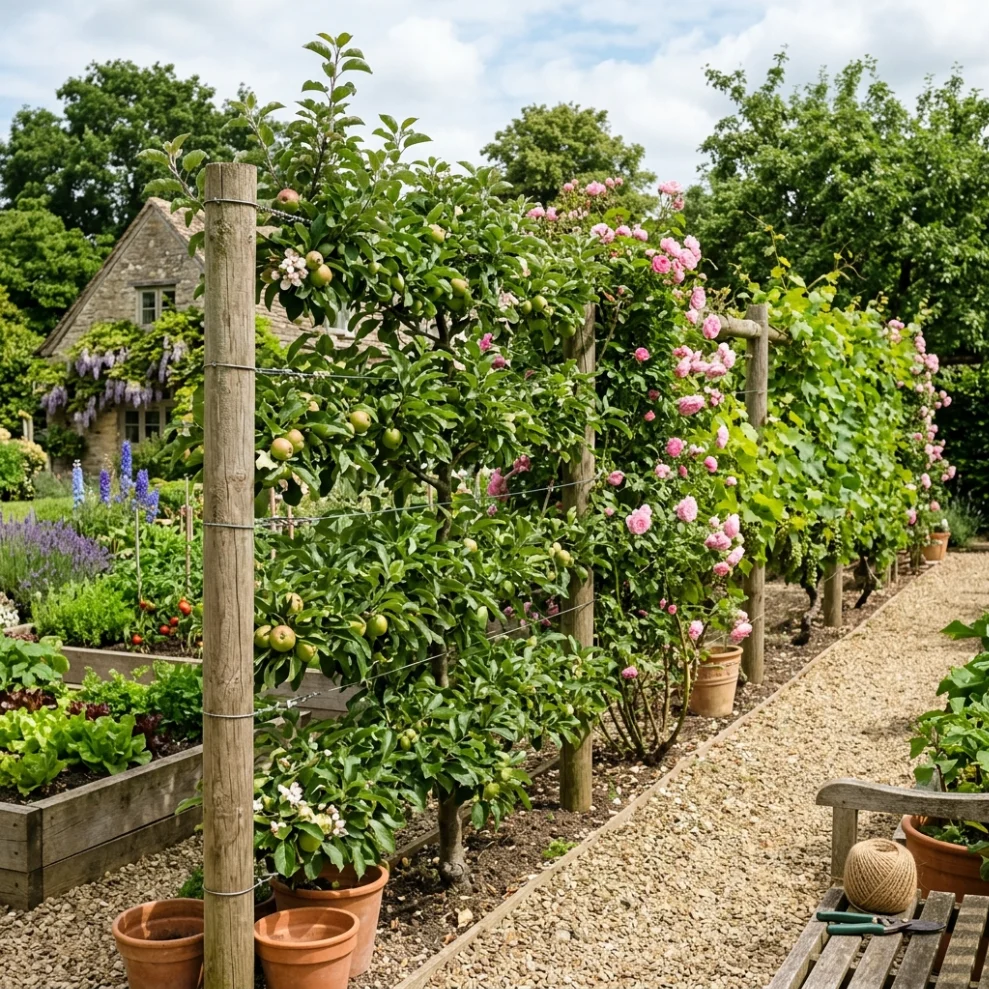
Apples, grapes, and climbing roses all work beautifully here. It’s a slower process, but the payoff is worth it as the structure fills in over time.
This approach fits perfectly into garden fence plans focused on blending function with nature. If you enjoy hands-on projects, it’s a rewarding take on garden fencing diy that keeps evolving season after season.
12. Gabion Stone Fence
Gabion fences use wire cages filled with stones to create a bold, textured boundary that feels both modern and grounded. They’re incredibly durable and hold up well in all weather conditions, making them a long-term investment.
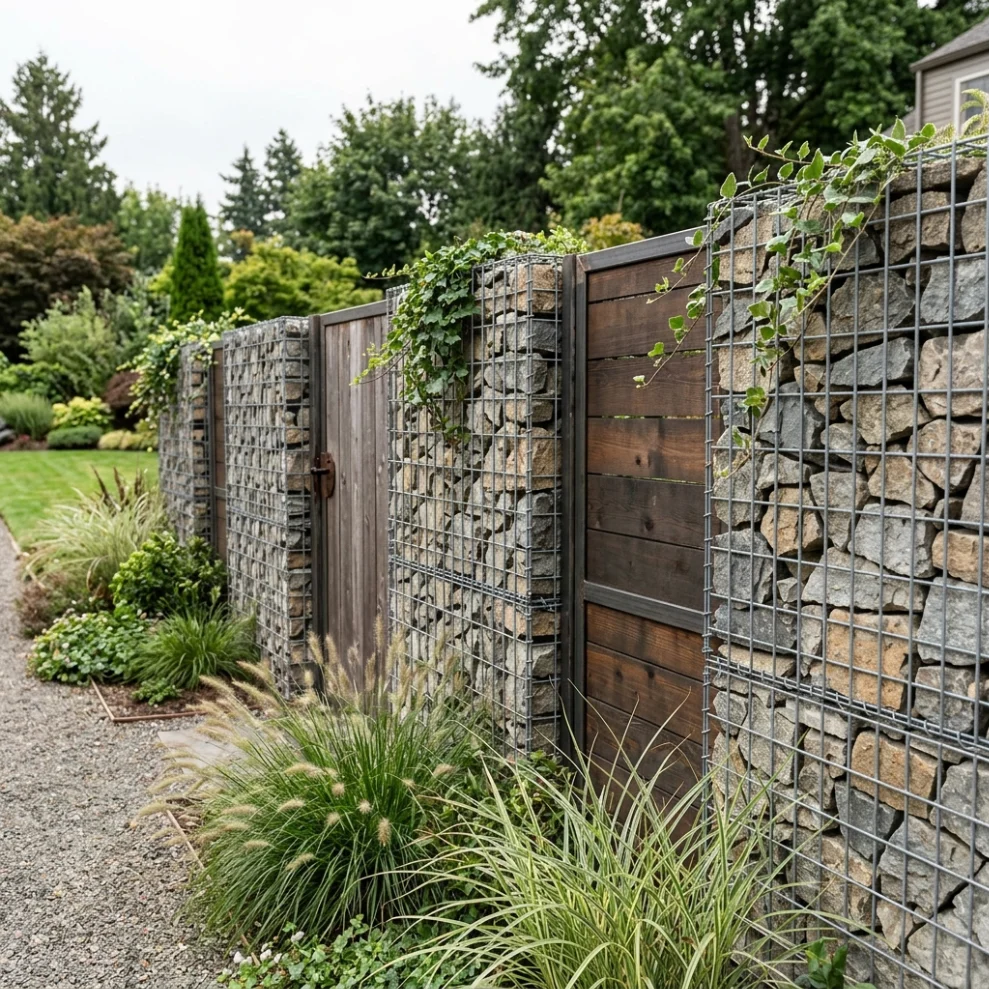
While they may look heavy, they can be styled creatively by mixing different stone sizes or even adding wood panels between sections.
This is a strong option for building a garden fence where stability matters. To soften the look, try landscaping a fence line with ornamental grasses or trailing plants that spill slightly over the edges.
13. Scalloped or Layered Picket Fence
If you like the idea of a picket fence but want something a little more playful, scalloped or layered designs add movement and personality.
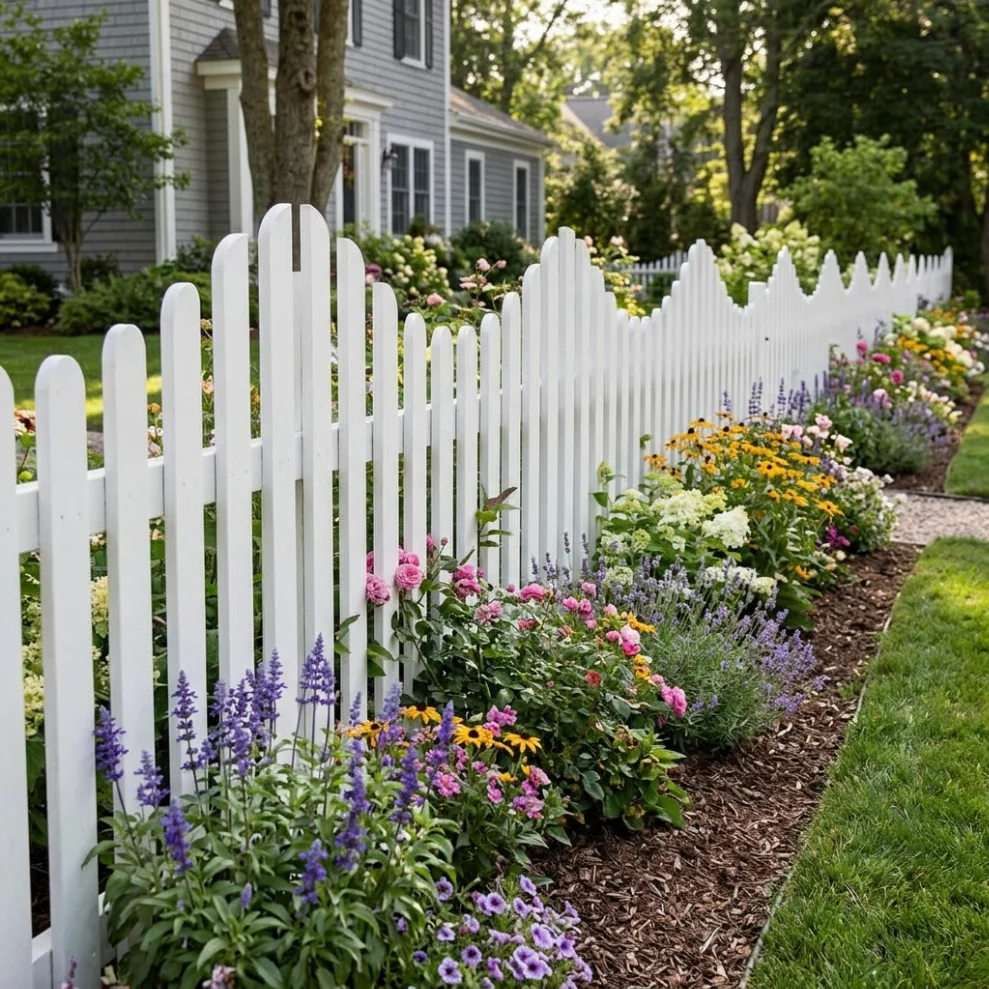
The curved tops or varied heights create a softer outline that feels more decorative without losing structure. This style works especially well around flower gardens where you want the fence to complement, not compete.
It’s often included in garden fence plans because it’s easy to customize with simple tools. Add colorful blooms along the base to enhance the shape and make landscaping a fence line feel more intentional and full.
14. Corten Steel or Laser-Cut Metal Fence
This style brings a strong, modern edge to outdoor spaces. Corten steel develops a natural rust-like patina over time, giving it warmth while still feeling architectural.
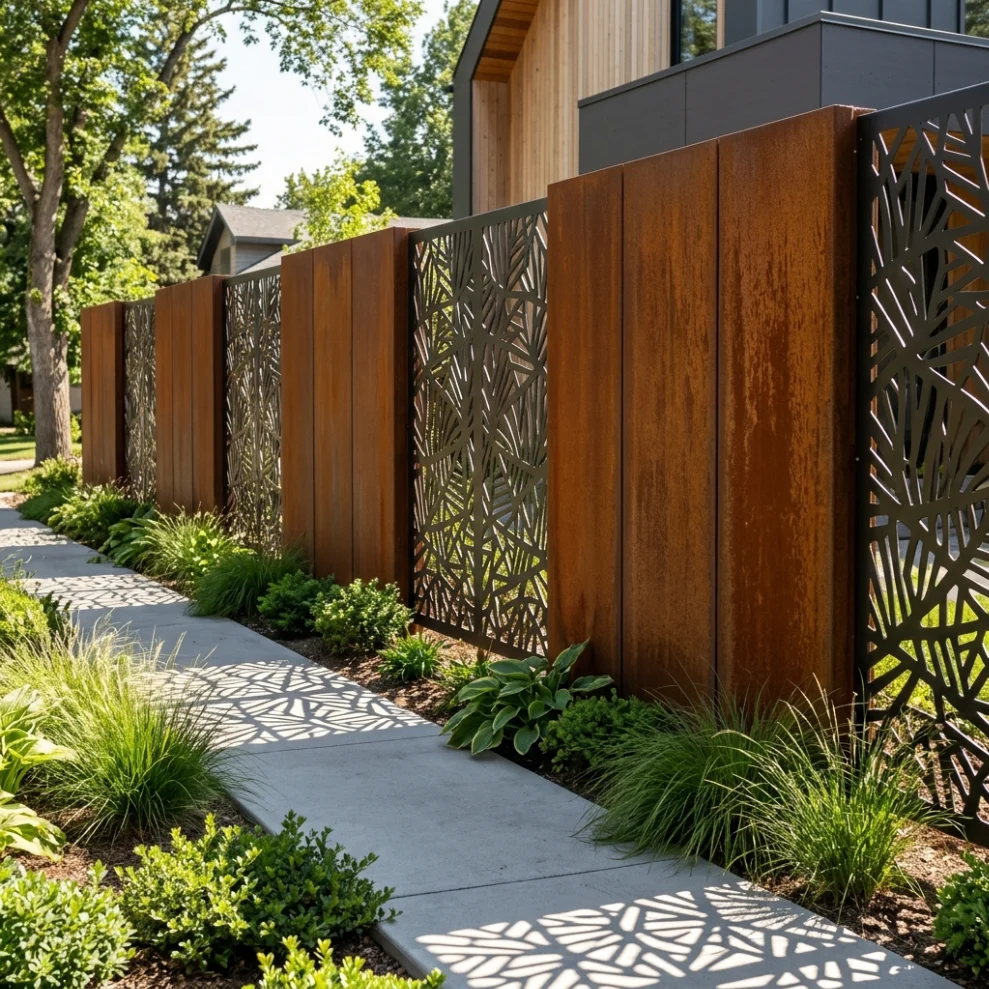
Laser-cut panels can feature patterns that filter light and create interesting shadows throughout the day. It’s a striking option for building a garden fence that doubles as a design feature.
While it leans more premium, it requires very little maintenance. Pair it with greenery or soft landscaping to balance the bold look.
15. Imperfect or Reclaimed Wood Fence
There’s something appealing about a fence that doesn’t look overly polished. Using reclaimed or slightly mismatched wood creates a relaxed, organic feel that works well in cottage or rustic gardens.
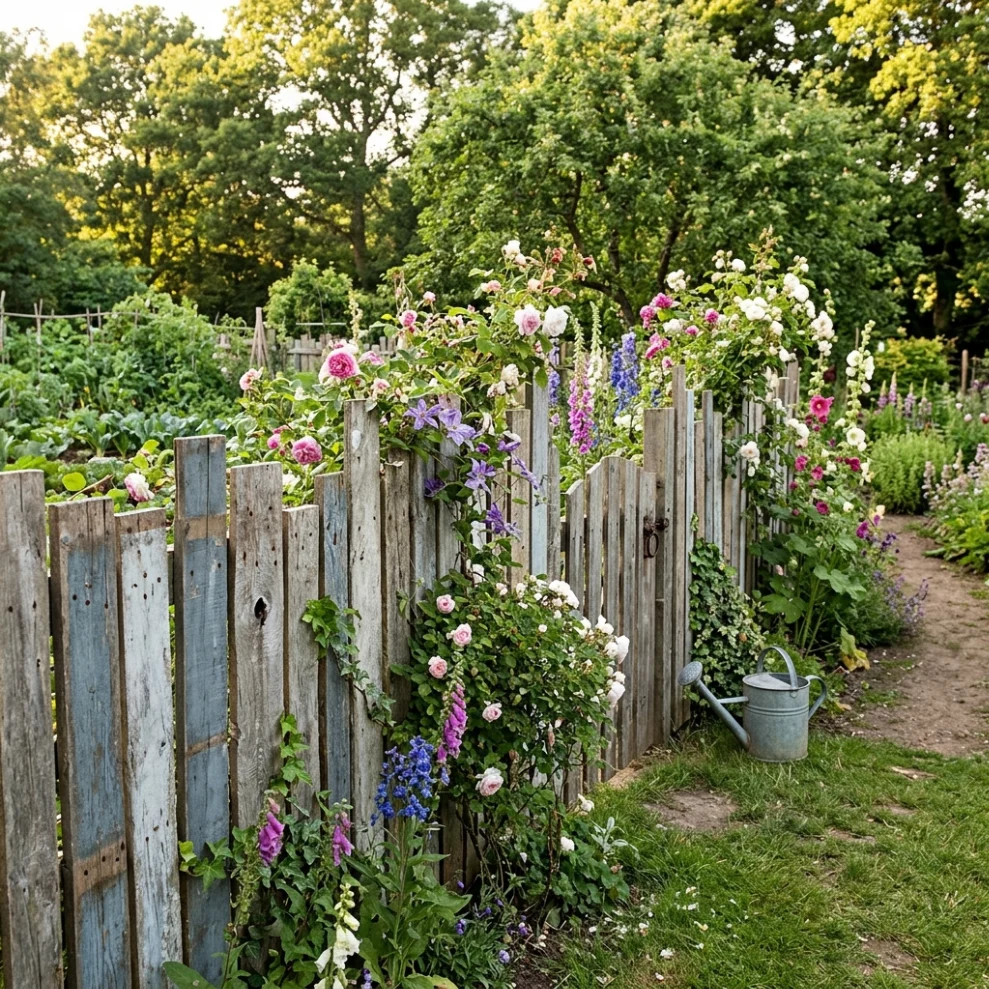
Each board has its own character, which adds depth and texture you don’t get from uniform materials. This is one of the more creative garden fencing diy approaches, especially if you enjoy working with salvaged materials.
It’s also budget-friendly and adaptable. When combined with natural planting, it turns landscaping a fence line into something that feels layered, lived-in, and quietly beautiful.
16. Vertical Garden Fence
A vertical garden fence turns a plain boundary into something alive and layered. By adding mounted planters, hanging pots, or pocket panels, you can grow herbs, flowers, or trailing greenery right on the fence itself.
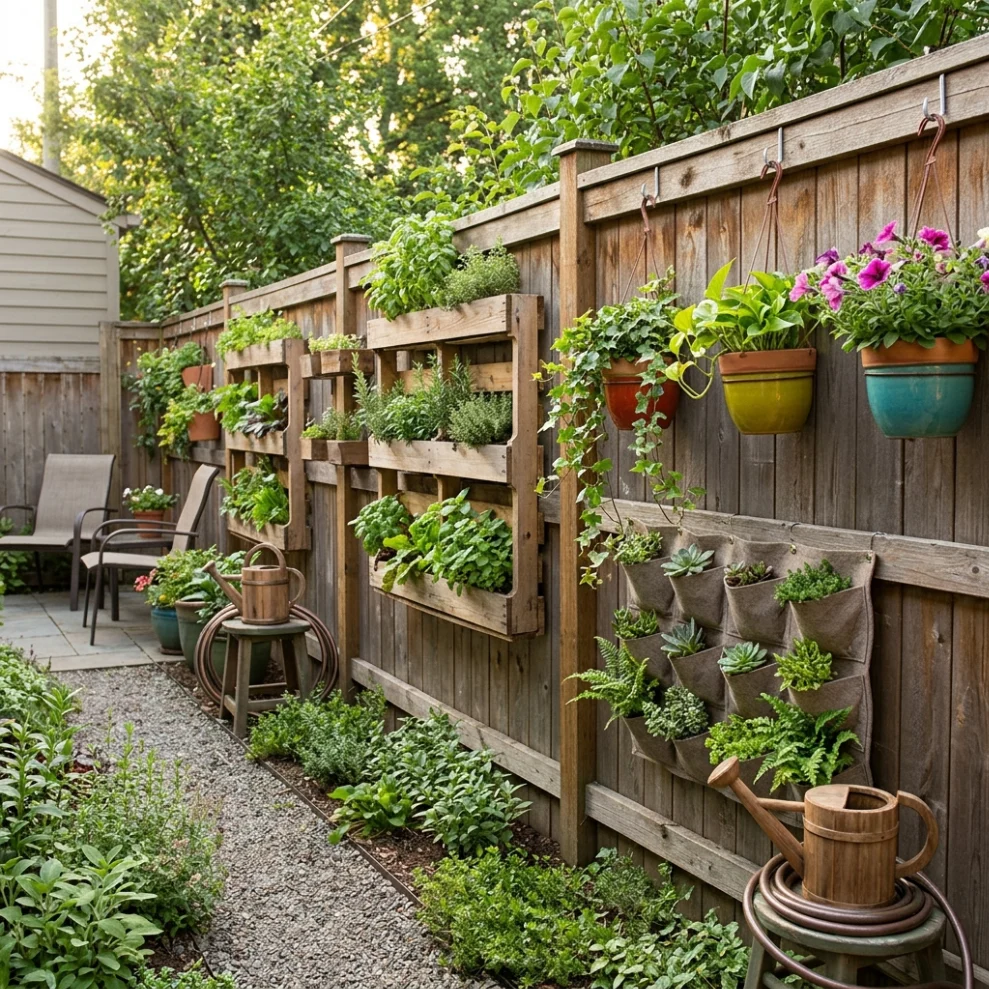
It’s especially useful in small spaces where ground planting is limited. This style fits perfectly into garden fencing diy because you can build it gradually using simple materials.
Over time, the fence becomes a lush backdrop rather than a divider. For a fuller look, focus on landscaping a fence line with mixed heights and textures so the greenery feels natural and not overly arranged.
17. Arbor or Pergola-Integrated Fence
Combining a fence with an arbor or pergola instantly creates a focal point, especially around entryways or garden paths.
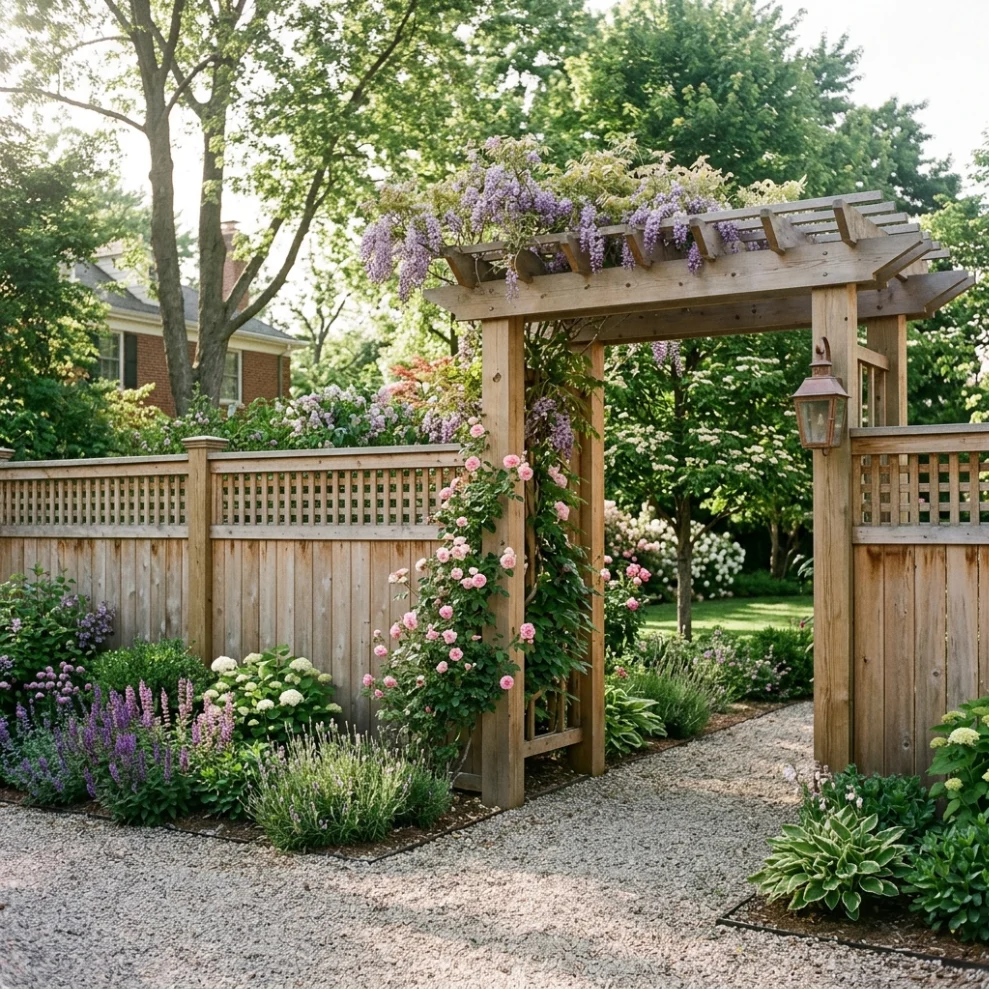
It frames the space in a way that feels intentional while also offering support for climbing plants like wisteria or roses. This idea works well if you want your garden to feel more structured without adding walls.
It’s a slightly bigger project, but worth considering when building a garden fence that adds both height and character.
With the right planting, landscaping a fence line around it can feel like a soft transition instead of a hard boundary.
18. Recycled Tire or Repurposed Fence
If you like unconventional ideas, using recycled materials like old tires or mixed salvaged items can create a fence that stands out completely.
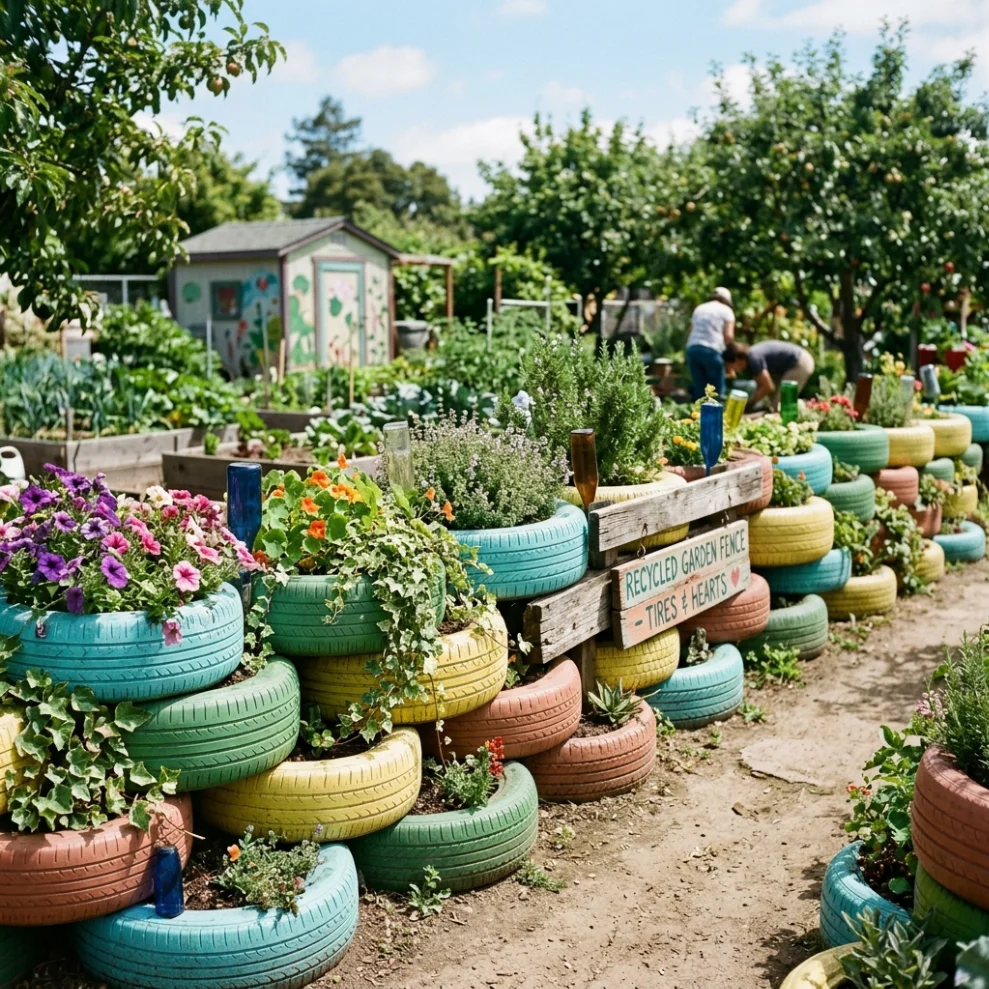
Tires can be stacked and filled with soil for planting, turning the fence into a functional garden feature. It’s one of the most creative garden fencing diy approaches and works well for those who want something affordable but unique.
While it leans more playful, it still serves a purpose by defining space. Pair it with bold plants or colors to make it feel intentional rather than random.
19. Dark-Stained or Bold Colored Fence
A darker fence can completely change how your garden looks. Deep tones like charcoal, black, or rich brown make greenery stand out more vividly, creating contrast that feels clean and modern.
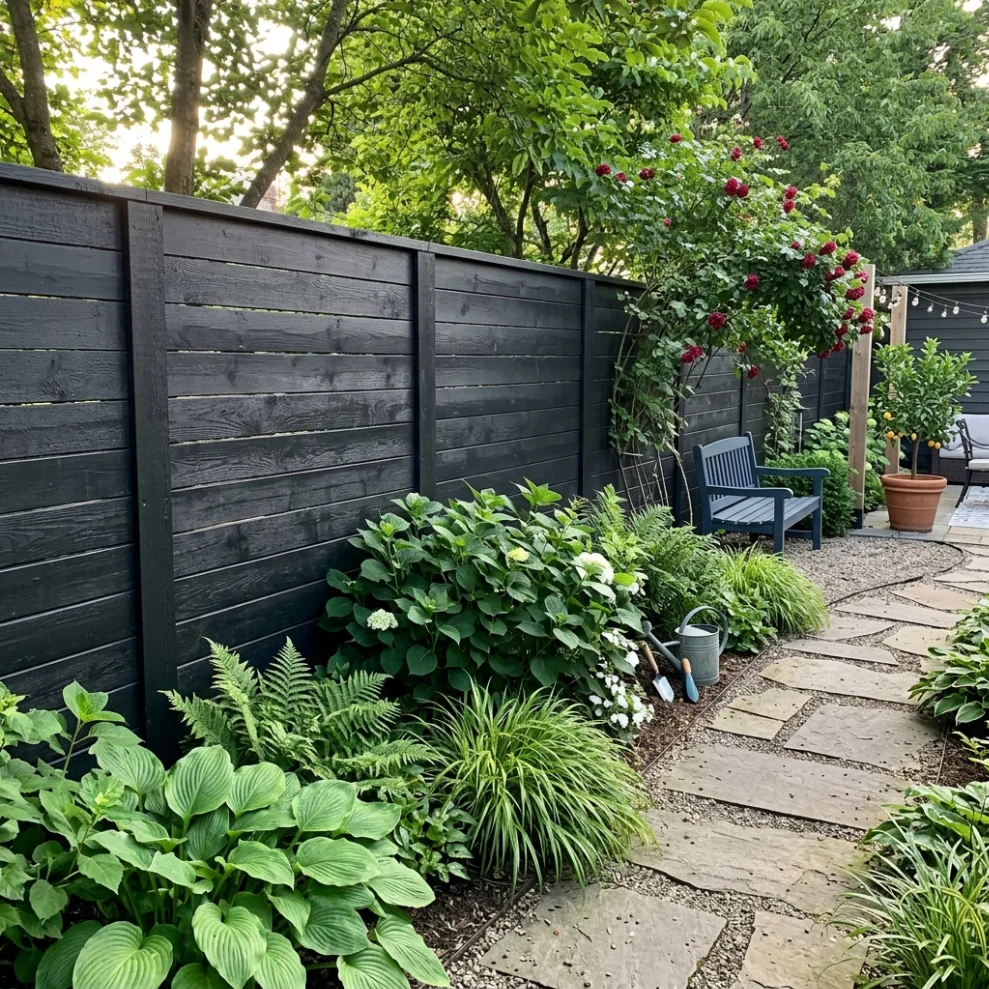
Even bold painted colors can work if balanced with the right plants. This is one of those quick fence ideas that delivers a big impact without rebuilding anything, sometimes all it takes is a fresh coat of paint or stain.
It’s a simple upgrade often included in garden fence plans when you want a noticeable transformation without a full construction project.
20. Tall Deer-Proof Wire or Mesh Fence
When protecting your plants is the priority, a taller wire or mesh fence becomes essential. It’s designed to keep out larger animals like deer while still allowing light and airflow through the space.
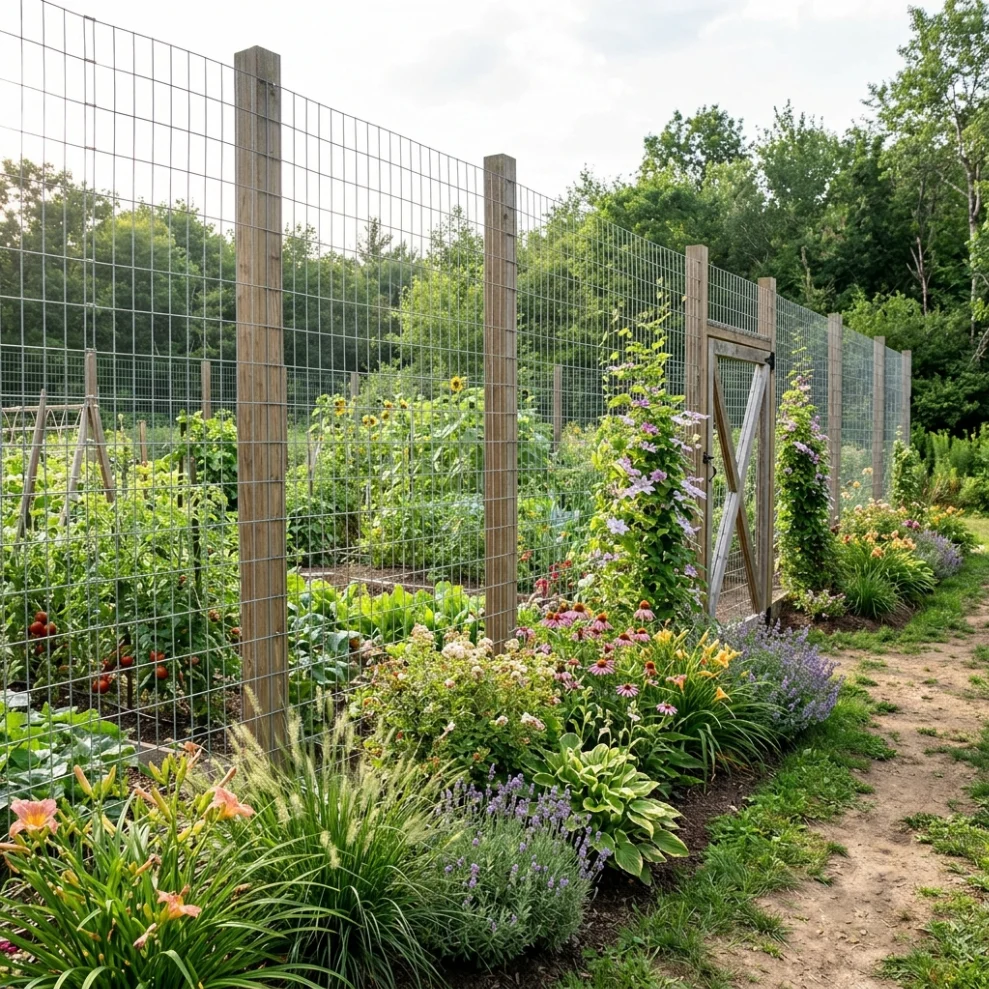
While it’s more functional than decorative, it can be softened by planting along the base or training vines to climb sections of it. This makes landscaping a fence line especially important to balance the look.
For anyone serious about growing vegetables or flowers in wildlife-prone areas, this is one of the most practical building a garden fence solutions you can choose.
21. Flower Pot or Planter-Topped Fence
Adding planters directly onto a fence turns a simple structure into a layered display of color and texture.
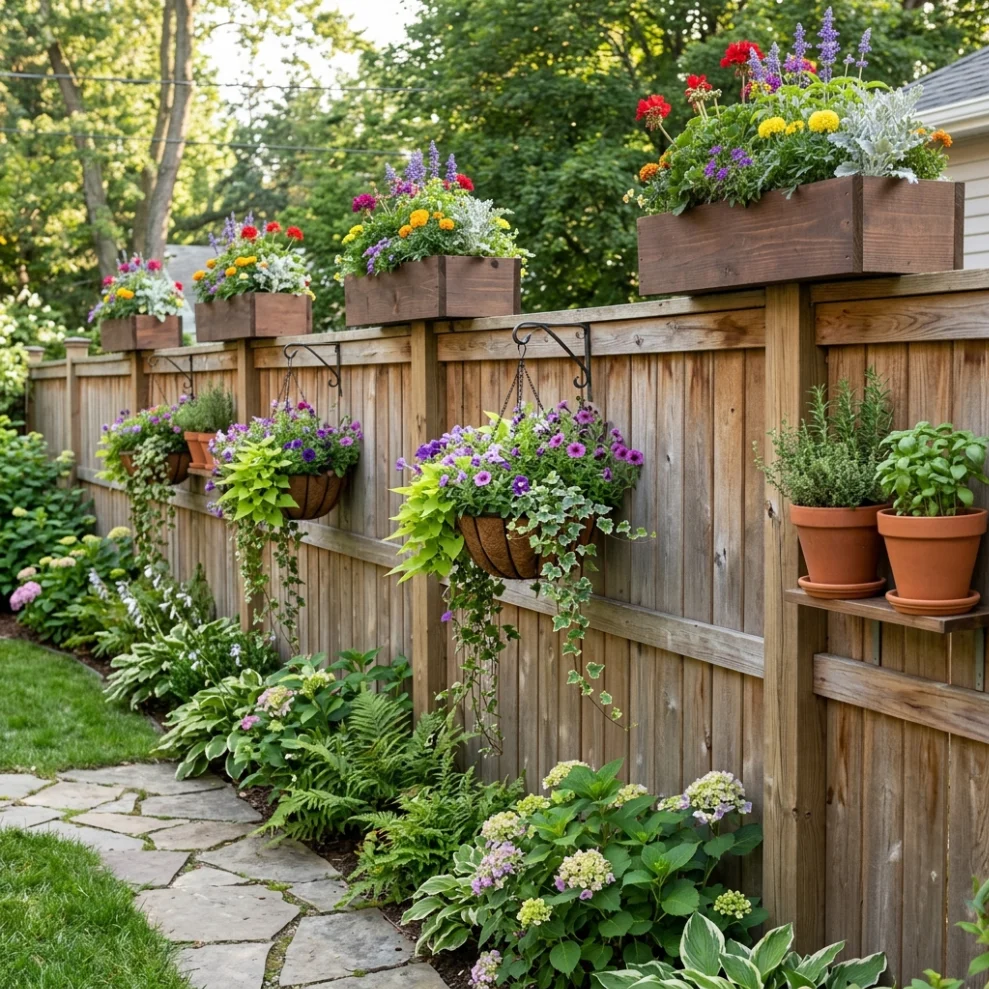
Clay pots, wooden boxes, or metal containers can sit on posts or hang along panels, giving you space for seasonal flowers, herbs, or trailing plants.
This idea works especially well when you want personality without rebuilding the entire fence. It’s often included in garden fence plans because it’s flexible and easy to update throughout the year.
When landscaping a fence line, mixing plant types, upright, bushy, and cascading, creates a fuller, more natural rhythm that feels lively rather than staged.
22. Wagon Wheel or Vintage Decor Fence
A fence decorated with wagon wheels, old tools, or salvaged metal pieces brings a strong rustic identity to a garden. Instead of being purely functional, it becomes part of the visual story of the space.
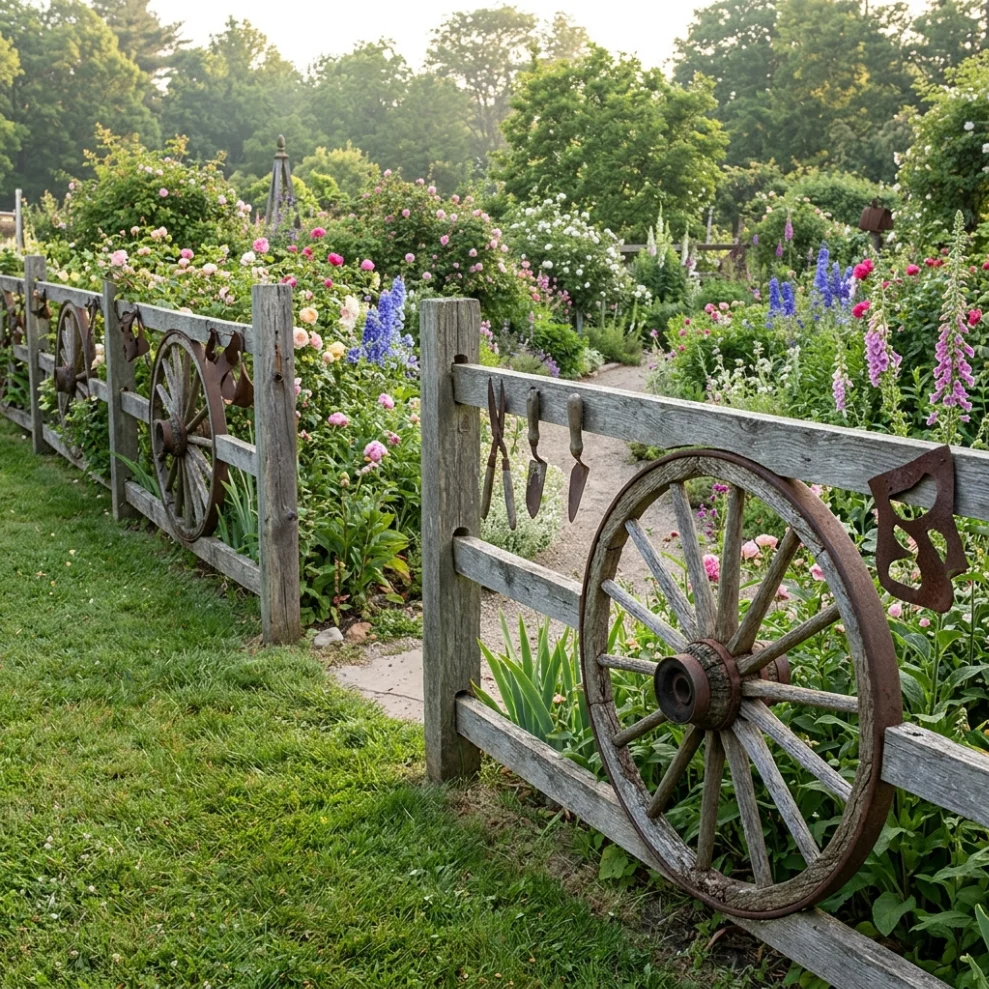
This approach works best in cottage-style or farmhouse gardens where imperfection feels intentional. It’s a creative form of garden fencing diy that relies more on styling than construction.
When done thoughtfully, even a basic fence can feel unique. Pairing it with soft greenery while landscaping a fence Line helps balance the heavier decorative elements with natural flow.
23. Lattice-Topped Privacy Fence
This style blends solid privacy with an open, airy finish. The lower section blocks direct views, while the lattice top lets light pass through and softens the overall height.
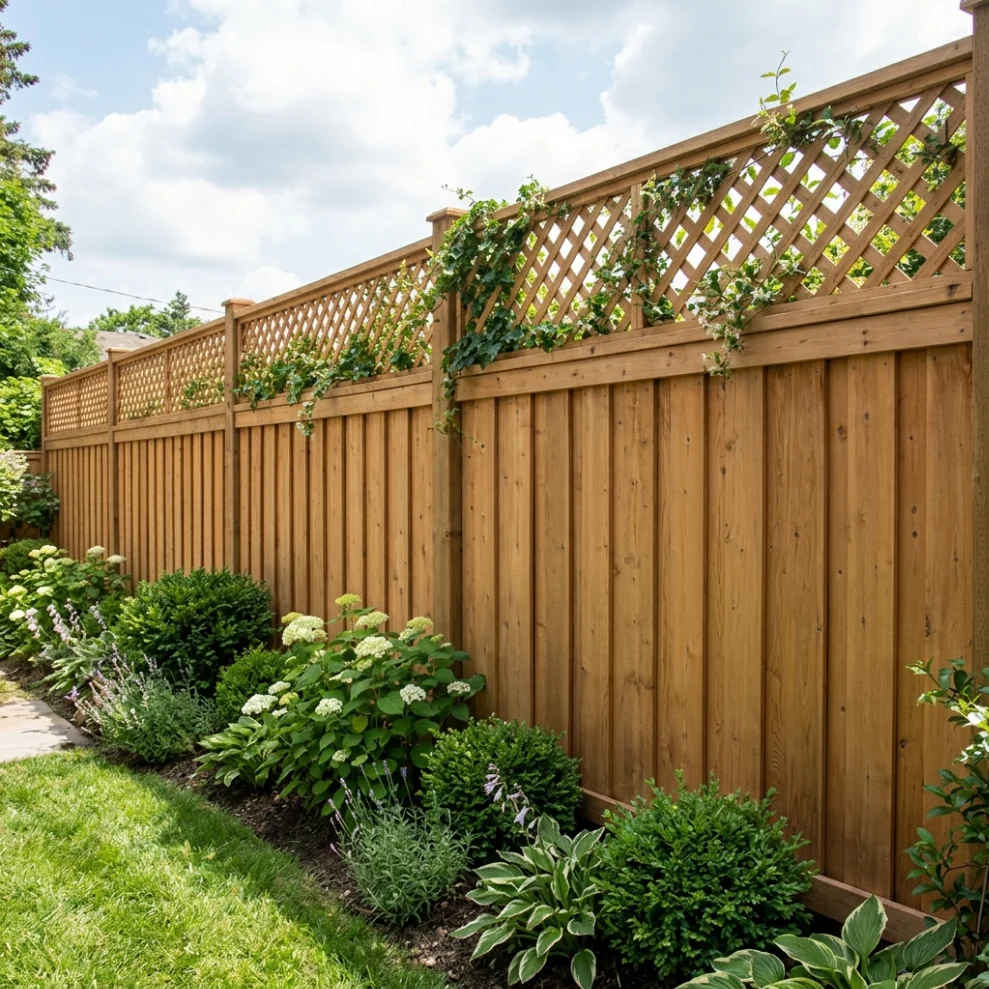
It’s a practical choice for gardens where full enclosure feels too heavy. Many garden fence plans use this design because it strikes a balance between comfort and openness.
Climbing plants like ivy or jasmine can be trained along the lattice to add softness. When landscaping a fence line, layering shrubs in front helps break up the structure and makes the transition into the garden feel more natural.
24. Short Hedge or Living Border Fence
Instead of building with materials, this approach uses plants themselves as the boundary. Low hedges or dense shrubs can define walkways, vegetable beds, or entire garden edges without feeling rigid.
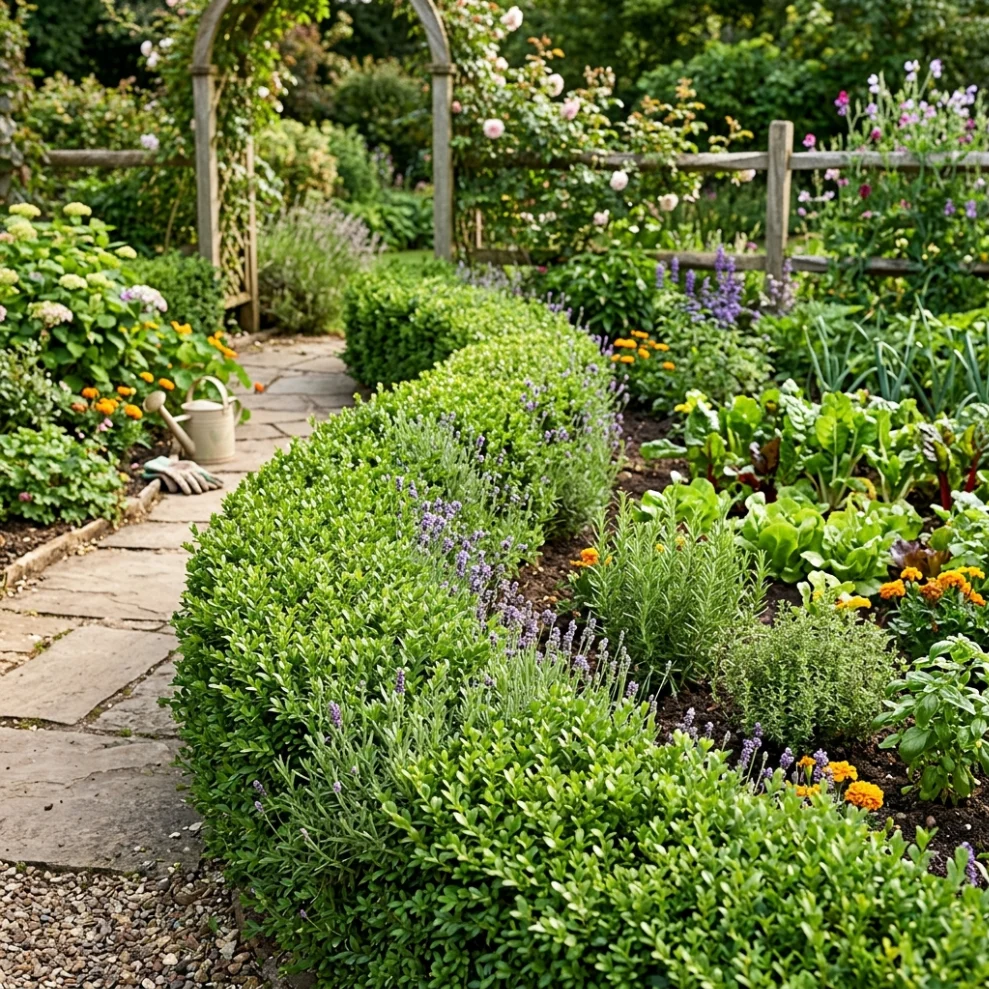
It’s one of the most natural ways to frame a space, especially if you prefer a softer look. This method fits well into garden fence plans focused on eco-friendly design.
While it takes time to grow, the result feels integrated rather than added on. Thoughtful fence line with mixed greenery helps maintain shape while keeping the border visually relaxed and inviting.
25. Accessorized Fence with Lights and Decor
A simple fence can completely change character with the right details. String lights, lanterns, mirrors, hanging art, or even seasonal decor can turn it into a focal point instead of just a boundary.
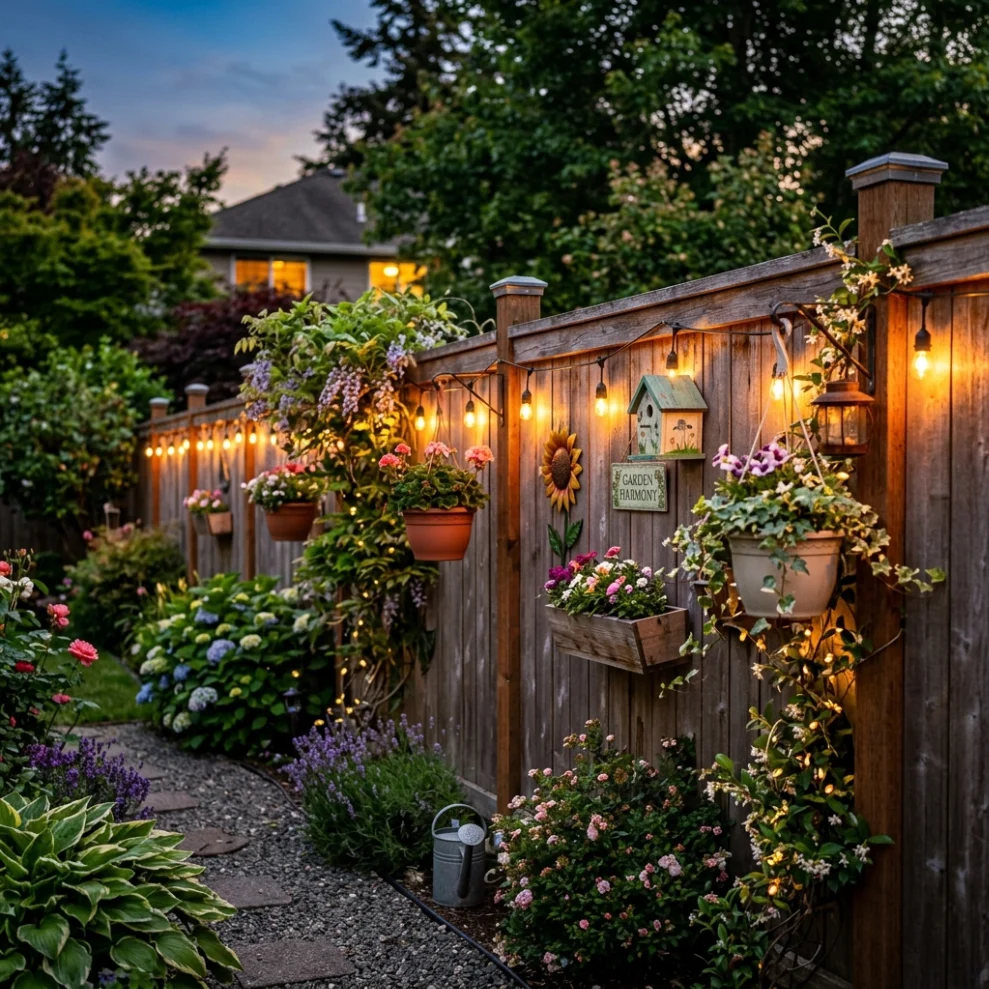
This is one of the easiest quick fence ideas because it upgrades what already exists without construction work. It also works across many styles, from modern to rustic, depending on what you add.
When included in garden fence plans, it’s often the final layer that brings personality. Careful landscaping a fence line nearby ensures the decorations feel integrated rather than randomly placed.